
 By Caleb Morgan
Updated November 2026
Running shoes for distance runners need to do more than feel good for the first mile. They have to hold up over long weekday runs, weekend long runs and the miles that pile up in between. This list compares five road shoes on cushioning, stability, weight, fit and the kind of durability owners tend to report over high mileage. Every pick is a neutral or stability daily trainer sold on Amazon US.
Our top picks at a glance
- 1
 TOP CHOICEBest overallBrooks Men's Hyperion Max 3 Neutral Running ShoeView on Amazon
- 2
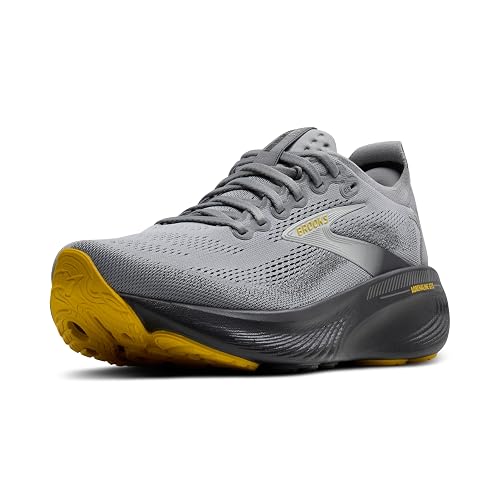 TOP CHOICEBest for stabilityBrooks Men's Adrenaline GTS 25 Running ShoeView on Amazon
- 3
 TOP CHOICEBest for tempo daysUnder Armour Men's Velociti Pace Running ShoesView on Amazon
- 4
 Best for everyday cushioningNew Balance Men's Fresh Foam 520 v9 Running ShoeView on Amazon
- 5
 Best for a smooth rideBrooks Men's Anthem 8 Running ShoeView on Amazon
Our Top Picks
Quick Comparison
| Product | Best for | Key feature |
|---|---|---|
| Brooks Men’s Hyperion Max 3 | Long, steady mileage | High-volume cushioning |
| Brooks Men’s Adrenaline GTS 25 | Overpronation control | Guidance support system |
| Under Armour Men’s Velociti Pace | Faster distance days | Responsive, lighter feel |
| New Balance Men’s Fresh Foam 520 v9 | Daily training base | Soft, forgiving midsole |
| Brooks Men’s Anthem 8 | Smooth, low-fatigue runs | Balanced, stable platform |
Brooks Men’s Hyperion Max 3 Neutral Running Shoe
Brooks Men's Hyperion Max 3 Neutral Running Shoe 12 Best Trail Running Shoes goes further into this.
Best for: Long, steady mileage
This suits runners building weekly volume who want maximum cushioning without a bulky ride. It is a neutral shoe, so it fits runners whose feet stay fairly centered through the stride.
Pros
- Deep cushioning that tends to hold comfort late in long runs
- Neutral platform that many owners describe as stable on straight routes
Cons
- Heavier than lighter tempo shoes
Brooks Men’s Adrenaline GTS 25 Running Shoe
Brooks Men's Adrenaline GTS 25 Running Shoe
Best for: Overpronation control
This is a common choice for runners who roll their feet inward and feel fatigue in the arch or knee over distance. The support is built into the shoe rather than added as a separate insert.
Pros
- Guidance support that owners often report as secure through the midfoot
- Cushioning suited to high-mileage training blocks
Cons
- Firmer support feel may not suit runners who prefer a fully soft ride
Under Armour Men’s Velociti Pace Running Shoes
Under Armour Men's Velociti Pace Running Shoes
Best for: Faster distance days
This fits runners who run tempo efforts or progression miles and want a responsive feel without going to a racing flat. It works well as a second shoe in a rotation.
Pros
- Lighter, more responsive ride for quicker paces
- Breathable upper that owners frequently mention in warm weather
Cons
- Less cushioning than a maximal trainer for very long slow runs
New Balance Men’s Fresh Foam 520 v9 Running Shoe
New Balance Men's Fresh Foam 520 v9 Running Shoe
Best for: Daily training base
This is a practical option for runners who log most of their miles at a conversational pace and want a soft, predictable shoe for everyday use. It rotates well with a firmer shoe for speed work.
Pros
- Soft midsole that many owners describe as comfortable from the first run
- Versatile enough for easy days and moderate long runs
Cons
- Not as responsive as dedicated tempo shoes
Brooks Men’s Anthem 8 Running Shoe
Brooks Men’s Anthem 8 Running Shoe
Best for: Smooth, low-fatigue runs
This suits runners who want a balanced platform that feels steady across long miles without a heavy stack. It is a good match for those who value a smooth transition through the stride.
Pros
- Balanced ride that owners often describe as stable and easy on the legs
- Moderate weight for a daily trainer
Cons
- Support is lighter than dedicated stability models
Buying Guide
Cushioning level
Higher-volume runners usually benefit from more midsole foam, which can help reduce perceived fatigue over long durations. Lower-mileage runners often prefer a firmer, more connected feel.
Stability and foot motion
If your foot rolls inward noticeably, a stability shoe can add guidance through the stride. Neutral shoes suit runners whose feet stay fairly centered.
Weight and responsiveness
Lighter shoes feel quicker at faster paces but may offer less cushioning for slow miles. Match the weight to the pace you run most often.
Fit and toe box room
Leave roughly a thumbnail’s width of space at the toe, and make sure the heel stays locked in without rubbing. Feet tend to swell over long runs, so test shoes later in the day if possible.
Good picks for this: Brooks Men’s Hyperion Max 3 and Brooks Men’s Adrenaline GTS 25
FAQ
How many miles should distance running shoes last?
Many running shoe makers suggest replacing shoes somewhere around 300 to 500 miles, though the right point depends on your weight, stride and surface. Watch for visible midsole compression or new aches as signals.
Related reading
- Running Shoes vs Trail Runners (2026): Which Is Better for Your Runs?
- Is a High-Stack Running Shoe Stable? What Runners Should Know
- 7 Best Ultra Running Trail Shoes for Long Distance Trail Runs (2026)
- 7 Best Running Shoes for Runners of Every Need (2026)
- 7 Best Running Shoes for Road Runners (2026)
- 7 Best Running Shoes for Long Distance Runs (2026)
About Caleb Morgan
Caleb Morgan is part of our editorial team and reviews and edits our running gear & races guides, checking product details against manufacturer specifications and owner feedback.


