

As an Amazon Associate I earn from qualifying purchases. This page may contain affiliate links.
A good running belt for marathon training does three jobs at once: it holds your phone, keys and gels without bouncing, it sits flat against your torso over 20-plus miles, and it lets you grab what you need without breaking stride. Those are the criteria we used to rank the seven options below. We looked at manufacturer specifications, brand track record for running accessories, and the patterns that appear again and again in owner feedback, such as bounce complaints, zipper reliability and whether a belt stays put once it gets sweaty. Each pick is matched to a specific type of runner so you can skip the ones that don’t fit your routine.
Our Top Picks
Quick Comparison
| Product | Best for | Key feature |
|---|---|---|
| Fitgriff Running Belt for Men & Women | Runners who want a simple, low-profile phone belt | Secure jogging pouch sized for most phones |
| Nathan Zipster Max Running Belt | Long runs needing extra storage | Extra large zipper pocket with bounce-free fit |
| Osprey Duro Dyna LT Belt for Running | Runners who carry hydration and gear on longer efforts | Lightweight belt built for running loads |
| Salomon Unisex Pulse Trail Running Storage Belt | Trail-leaning marathoners with more gear | Generous XL storage with a stable fit |
| Fitletic Ultimate II Running Pouch | Race-day fueling with gels | Gel loops and exterior pocket |
| Fitletic Hydra 16 Hydration Running Belt | Runners who need fluid on long training runs | Holds two water bottles plus a sealed phone pouch |
| FlipBelt Zipper Running Belt | Minimalist runners who want a near-invisible belt | Zippered pocket that sits flat under a shirt |
Fitgriff Running Belt for Men & Women

Fitgriff® Running Belt for Men & Women – Secure Jogging Pouch for Phone, Keys & Essentials – For All Cell Phones
This belt suits marathon trainees who mainly need to carry a phone and a few essentials on shorter weekday runs and want something that disappears under a shirt. It is a good first belt if you are new to carrying gear.
Key specs
- Designed as a jogging pouch for phones, keys and small essentials
- Listed as compatible with most cell phone sizes
- Unisex sizing for men and women
Pros
- Low-profile design that stays out of the way
- Simple to put on and adjust
- Budget-friendly option for casual training
Cons
- Limited capacity for gels or hydration
- Owners with larger phones sometimes report a snug fit
Nathan Zipster Max Running Belt
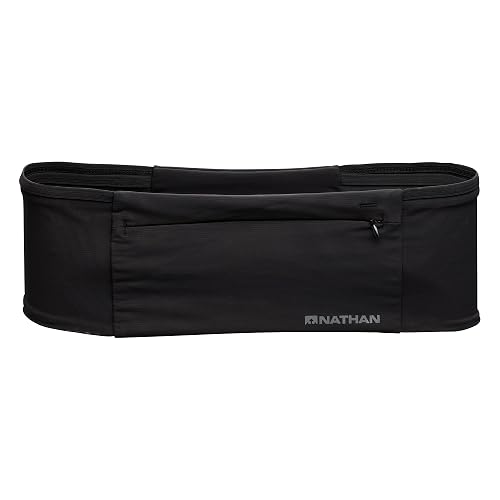
Nathan Zipster Max Running Belt, Running Belts for Women and Men, Bounce-Free Waist Pack with Extra Large Zipper Pocket, Smartphone Storage, Walking, Gym, Hiking
Marathoners who carry a phone, gels and a few extras on 15- to 20-mile training runs will get the most from this belt. Its larger main pocket is the main reason to choose it over a basic pouch.
Key specs
- Extra large zipper pocket for storage
- Dedicated smartphone storage
- Bounce-free waist pack design
Pros
- Generous storage for longer runs
- Designed to limit bounce during stride
- Works for walking, gym and hiking too
Cons
- Larger than minimalist belts, which some runners dislike
- Not designed to hold a hydration bottle
Osprey Duro Dyna LT Belt for Running

Osprey Duro Dyna LT Belt for Running
This option fits runners who want a lightweight belt built for running loads and who may carry more than a phone during a long effort. Osprey is known for pack and carry systems, which is why this model appeals to runners who think about load distribution.
Key specs
- Running-specific belt design from a well-known pack brand
- Lightweight construction intended for extended wear
Pros
- Carry system designed with load in mind
- Stable feel during longer efforts
- Backed by an established outdoor brand
Cons
- Fewer specs are published than on some competitors
- May be more than casual runners need
Salomon Unisex Pulse Trail Running Storage Belt – Black – XL

Salomon Unisex Pulse Trail Running Storage Belt – Black – XL
Trail-leaning marathoners who need room for layers, snacks and a phone will find the XL size useful. It is a practical pick for courses with changing weather or long stretches without aid stations.
Key specs
- XL size listed in the product name
- Black colorway
- Designed as a trail running storage belt
Pros
- Ample storage for extra items
- Trail-oriented design from a known running brand
- Unisex fit
Cons
- Larger footprint than road-focused belts
- Sizing should be checked against your waist measurement
Fitletic Ultimate II Running Pouch

Fitletic – Ultimate II Running Pouch with Gels, Runners Pouch, Running Waist Belt with Gel Loops, Exterior Pocket, Inner Pocket, and Integrated Bib Toggles, Running Accessories
Runners who take gels at set intervals during a marathon will appreciate the built-in gel loops. It suits race-day fueling more than casual training, especially if you plan your nutrition in advance.
Key specs
- Gel loops for carrying fuel
- Exterior pocket and inner pocket
- Integrated bib toggles listed in the product name
Pros
- Organized storage for gels and essentials
- Bib toggles help keep the belt in place
- Useful on race day for quick access
Cons
- Can feel busy for runners who carry very little
- Gel loops may not suit every gel shape
Fitletic Hydra 16 Hydration Running Belt

Water-resistant 8 x 4 in phone pouch fits iPhone Pro Max and Samsung Galaxy Ultra series; no-bounce fit with 16 oz hydration Fitletic Hydra 16 Hydration Running Belt with 2 Water Bottles
This is the choice for runners whose long training runs require fluid on the move. It pairs a water-resistant phone pouch with two bottles, which makes it a practical match for warm-weather marathon blocks.
Key specs
- Water-resistant phone pouch listed at 8 x 4 in
- Listed as fitting iPhone Pro Max and Samsung Galaxy Ultra series
- 16 oz hydration capacity with two water bottles included
Pros
- Carries fluid and phone together
- Water-resistant pouch helps in rain
- No-bounce fit when properly adjusted
Cons
- Bottles add weight and visible bulk
- Less suited to runners who only need a phone
FlipBelt Zipper Running Belt

FlipBelt Zipper Running Belt, Waist Pack for Fitness and Running, US Company
Minimalist marathoners who want storage without a visible belt will find this one appealing. It is often chosen by runners who wear fitted shirts and dislike the look of a traditional pouch.
Key specs
- Zippered pocket for secure storage
- Designed as a waist pack for fitness and running
- Listed as a US-based company product
Pros
- Sits flat and largely hidden under clothing
- Zipper keeps items secure during bouncing strides
- Simple, no-frills design
Cons
- Limited room for bulky items
- Owners sometimes report needing to adjust fit during long runs
Buying Guide
Choosing a running belt for marathon training comes down to how much you carry, how long you run, and how much you care about bounce and visibility. Start with a list of what you actually take on a typical long run. If the list is only a phone and a key, a slim pouch is enough. If it includes gels, a jacket and fluid, you need more capacity and a stronger fit.
Selection Criteria
- Storage capacity: Measure your phone and gels. Make sure the main pocket fits both with room to spare.
- Bounce control: Look for a belt that stays flat at your hip or lower back. A belt that rides up will bounce more.
- Adjustability: Confirm the waist range matches your measurement, and check whether it stays put after you sweat.
- Access: Zippers are secure, but you should be able to open them one-handed while running.
Important Features
- Zippered pockets for security during long efforts
- Gel loops if you fuel during the race
- Water-resistant material if you run in rain
- Reflective details for low-light training
Specs to Check
- Pocket dimensions versus your phone and gel sizes
- Waist size range, measured at your natural waist
- Capacity for fluid, if you plan to hydrate on the move
- Material and whether it is intended for sweat and rain
Choosing by Need
- Short training runs and casual use: a slim pouch such as the Fitgriff or FlipBelt.
- Long runs with extra gear: a larger belt such as the Nathan Zipster Max or Salomon Pulse.
- Race-day fueling: the Fitletic Ultimate II with gel loops.
- Warm weather and fluid needs: the Fitletic Hydra 16.
Things to Watch Out For
- Overloading a belt, which increases bounce and chafing
- Skipping a fit test before race day
- Buying a belt that is too large for your phone’s exact model
- Ignoring chafing from zipper edges or seams
For a broader look at belt styles, see Types of Running Hydration Belt: 4 Styles and Who Each Suits and Running Belt Buying Guide. If you want a full race-day checklist, Running Race Day Gear Checklist covers what else to pack.
FAQ
Do I need a running belt for a marathon?
You do not need one, but most marathoners find it easier to carry a phone, keys and gels in a belt than in pockets. A belt keeps weight off your arms and lets you access items without stopping.
Where should a running belt sit?
Most runners wear a belt low on the hips or just above the hip bones. Keep it flat and snug so it does not ride up or sway with each stride.
How do I stop a running belt from bouncing?
Adjust the belt so it is snug without digging in, and avoid overloading the main pocket. Distributing weight evenly and zipping items securely also helps.
Can I carry a water bottle in a running belt?
Some belts are designed for it, such as the Fitletic Hydra 16, which holds two bottles. Check the listed capacity before buying, since not every belt is built to hold a bottle.
How should a running belt fit for a marathon?
Try the belt with everything you plan to carry on race day. Run a few miles in it to check for bounce, chafing and whether the fit holds after sweating.
Is a running belt the same as a running vest?
No. A belt sits at the waist and carries lighter items, while a vest distributes more weight across the shoulders and chest. Consider a vest if you need to carry a lot of gear or fluid.
Should I check with a professional about my running gear?
For most runners, a belt is a simple accessory. If you have a medical condition, skin sensitivity or a history of chafing, consult a physician or a running coach before changing your race-day setup.
Conclusion
For a simple phone and key carry on training days, the Fitgriff or FlipBelt will keep things light and out of sight. Runners who need more room for gels and layers should look at the Nathan Zipster Max or the Salomon Pulse. Race-day fuelers will get the most from the Fitletic Ultimate II, while anyone running long in warm conditions should consider the Fitletic Hydra 16. Whichever you choose, test the fit on a real training run before your marathon, and make sure the belt stays put when you are tired and sweaty, because that is when fit problems show up.



