

As an Amazon Associate I earn from qualifying purchases. This page may contain affiliate links.
Choosing a sports watch for running comes down to what you actually need it to do. Some runners want a simple GPS watch that logs pace and distance without fuss. Others want training plans, recovery metrics, offline maps or a battery that lasts through a multi-day trek. This list covers ten models across those needs. We judged each one on published specifications, brand reputation for GPS and heart-rate performance, battery life as stated by the manufacturer, and the patterns that show up in owner feedback, such as comfort during long runs and how usable the software feels. None of these picks were tested in a lab or on our own runs, so treat the specs as manufacturer claims and check them against your own priorities before buying.
Our Top Picks
Quick Comparison
| Product | Best for | Key feature |
|---|---|---|
| Garmin Forerunner 165 | Everyday runners who want training guidance | Daily suggested workouts and Garmin Coach |
| Garmin vívoactive 5 | Runners who also track health and sleep | Body Battery energy monitoring |
| Garmin Forerunner 55 | Beginners on a simple GPS watch | Long battery life with GPS running modes |
| Timex Ironman Classic 30 | Runners who want a basic lap timer | 30-lap memory and countdown timer |
| Suunto Run | Runners who want offline music and multisport tracking | Dual-band GNSS and 4GB offline music |
| Garmin Forerunner 935 (Renewed) | Triathletes and serious multisport runners | Multisport training and advanced metrics |
| Polar Street X | Rugged outdoor runners | Waterproof build and 10-day battery |
| COROS PACE Pro | Runners who want long battery and offline maps | 20-day battery and global offline maps |
| Garmin Forerunner 70 | New runners who want guided plans | Adaptive training plans |
| Garmin Forerunner 45s | Budget-minded beginners | Garmin Coach free training plans |
Garmin Forerunner 165

GarminEssential Training & Recovery Features, Built-In GPS for Distance, Pace & Speed, Garmin Coach, Daily Suggested Workouts Forerunner® 165, Running Smartwatch, 43mm, Black
If you want more background, see 21 Best Running Sports Bras.
This model suits runners who want a structured training plan and a watch that gives daily workout suggestions. It is a good fit for people moving from casual running toward regular training blocks.
Key specs
- 43mm case, black finish
- Built-in GPS for distance, pace and speed
- Garmin Coach and daily suggested workouts
Pros
- Training guidance adapts to your recent running load.
- GPS tracking is well suited to road and trail routes alike.
- Smartwatch features cover notifications and basic health tracking.
Cons
- Full feature set takes time to learn in the Garmin Connect app.
- Battery life is shorter than the simpler Forerunner models.
Garmin vívoactive 5

Garmin24/7 Health Monitoring, Built-In Sports Apps, Sleep Coach, Body Battery™ Energy Monitoring, Workout Benefit & Recovery Time vívoactive® 5, Health & Fitness GPS Smartwatch, 42mm, Ivory
This watch fits runners who want a watch that also tracks sleep, stress and daily activity. It works well if you run a few days a week and care about recovery as much as pace.
Key specs
- 42mm case, ivory finish
- 24/7 health monitoring
- Body Battery energy monitoring and Sleep Coach
Pros
- Recovery metrics help you decide when to push and when to rest.
- Built-in sports apps cover many activities beyond running.
- Lighter and more casual in appearance than dedicated running watches.
Cons
- Running-specific analytics are less detailed than top Forerunner models.
- Smaller screen area may feel tight for some users reviewing data mid-run.
Garmin Forerunner 55

Garmin Forerunner 55, GPS Running Watch with Daily Suggested Workouts, Up to 2 Weeks of Battery Life, Black – 010-02562-00
This is a practical choice for beginners who want reliable GPS and suggested workouts without paying for features they will not use. It is built around running from the start.
Key specs
- GPS running watch with daily suggested workouts
- Battery life stated by Garmin at up to two weeks in smartwatch mode
- Black finish
Pros
- Long battery life means fewer charging interruptions.
- Simple button and screen layout is easy to read while moving.
- Suggested workouts give new runners a clear starting structure.
Cons
- Display is basic compared with AMOLED models.
- Advanced training metrics are limited for experienced runners.
Timex Ironman Classic 30
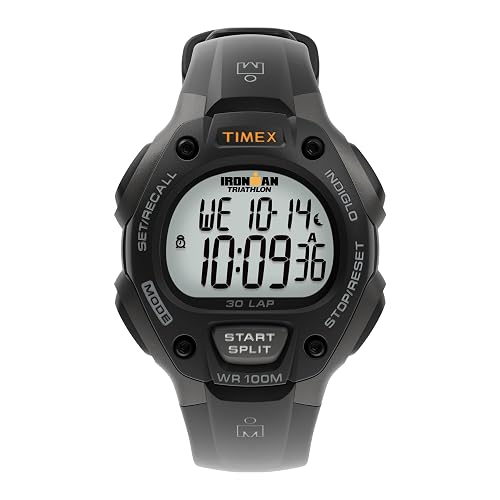
100-Hour Chronograph with 30-Lap Memory, 24-Hour Countdown Timer, Three Alarms & Two Time Zones, Digital Display with INDIGLO Timex Men's Ironman Classic 30 38mm Watch
This is a no-frills option for runners who mainly want lap timing and a countdown, not GPS or heart-rate data. It suits track workouts and people who want a watch that does not depend on a phone or satellite signal.
Key specs
- 30-lap memory
- 24-hour countdown timer and three alarms
- INDIGLO backlight and two time zones
Pros
- Lap memory is useful for interval sessions.
- Simple controls work well with gloves or sweaty hands.
- No GPS means no satellite lock delays.
Cons
- No GPS, so distance and pace on routes are not tracked.
- No heart-rate monitoring or training plans.
Suunto Run

Dual-Band GNSS, 12D Battery Life, Touchscreen, 34+ Sports, Daily Activity&Recovery Tracking, 4GB Offline Music, SUUNTO App SUUNTO Run GPS Sport Running Watch, Lightweight 1.32" AMOLED, Gray Silicone
This watch appeals to runners who want dual-band satellite accuracy, offline music and support for many sports. It is a strong pick for people who run with headphones and want to leave the phone at home.
Key specs
- Dual-band GNSS positioning
- 1.32-inch AMOLED touchscreen
- 4GB offline music storage and 34+ sport modes
Pros
- Offline music lets you run without carrying a phone.
- Dual-band GNSS is designed to hold position better in tree cover and cities.
- Lightweight build suits all-day wear.
Cons
- Music sync and app setup can take some patience.
- Silicone strap feels less premium than metal options for some owners.
Garmin Forerunner 935 (Renewed)

Garmin (Refurbished) Forerunner 935 Sleek Sport Watch Running GPS Unit -Black (Renewed)
This renewed unit is aimed at triathletes and multisport runners who want detailed training load and swim-to-run data. Buyers should understand that renewed units come with a refurbishment condition and may have cosmetic wear.
Key specs
- Built-in GPS running and multisport tracking
- Black finish
- Sold as renewed, meaning refurbished
Pros
- Multisport modes handle swim, bike and run transitions.
- Advanced training metrics suit structured programs.
- Can be a lower-cost route into a premium Garmin model.
Cons
- Renewed condition means cosmetic marks are possible.
- Older generation, so newer models have updated sensors and displays.
Polar Street X

Polar Street X – GPS Running Sports Watch – Rugged Waterproof – 170+ Sport Profiles – 10 Day Battery – AMOLED Display – Wrist Based Heart Rate Monitor – Built-in Flashlight
This is a rugged option for trail and outdoor runners who want a bright display, a long battery and built-in tools for night runs. It suits people who train in rain, cold or remote areas.
Key specs
- AMOLED display
- Waterproof build and 10-day battery life as stated by Polar
- Wrist-based heart-rate monitor and built-in flashlight
Pros
- Built-in flashlight helps with early or late runs.
- Long battery suits multi-day outings.
- Large sport profile library covers many activities.
Cons
- Bulkier profile than slim running watches.
- Software and sync setup takes time for new users.
COROS PACE Pro

COROSFastest in Class Processor, 20 Days Battery Life, Navigation with Global Offline Maps, Sleep Tracking, Running, Cycling PACE Pro GPS Sport Watch, 1.3-inch AMOLED Touchscreen – Blue
This watch is for runners who want a long battery and offline navigation without the bulk of a large outdoor watch. It fits trail runners and anyone who plans routes ahead.
Key specs
- 1.3-inch AMOLED touchscreen
- Battery life stated by COROS at up to 20 days in standard use
- Global offline maps and sleep tracking
Pros
- Long battery reduces charging worries on big training weeks.
- Offline maps help on routes without cell coverage.
- Lightweight design is comfortable for long runs.
Cons
- Map features take practice to use smoothly while running.
- Smaller brand footprint means fewer third-party accessories.
Garmin Forerunner 70

Beginner-Level Running Smartwatch, Pace, Distance and Heart Rate, Daily Suggested Workouts, Adaptive Training Plans Garmin Forerunner® 70, 43mm, Tidal Blue
This model is designed for beginners who want pace, distance and heart-rate tracking with guided adaptive plans. It is a sensible step up for someone who has just started running regularly.
Key specs
- 43mm case, Tidal Blue finish
- Pace, distance and heart-rate tracking
- Daily suggested workouts and adaptive training plans
Pros
- Adaptive plans adjust as your fitness changes.
- Beginner-friendly interface keeps the focus on running.
- Suggested workouts reduce guesswork about what to do next.
Cons
- Experienced runners may outgrow the training depth.
- Fewer advanced analytics than premium Forerunner models.
Garmin Forerunner 45s

Garmin Forerunner 45s, 39MM Easy-to-Use GPS Running Watch with Garmin Coach Free Training Plan Support, Black
This smaller watch suits beginners and runners with smaller wrists who want GPS and Garmin Coach without a large display. It is a practical choice for a first running watch.
Key specs
- 39mm case, black finish
- GPS running tracking
- Garmin Coach free training plan support
Pros
- Compact size fits smaller wrists comfortably.
- Free training plans give a clear path for new runners.
- Easy menus make it simple to start a run quickly.
Cons
- Smaller screen can be harder to read at a glance in bright light.
- Limited features compared with newer Forerunner models.
Buying Guide
The right sports watch for running depends on three things: how you train, where you run and how much you want the watch to do for you. Start with those questions before you look at features.
Selection Criteria
Look at GPS accuracy first, because pace and distance are the core of any running watch. Dual-band or multi-band GNSS generally holds a stronger signal near buildings and under trees. Next, check battery life for your longest typical session. If you run ultras or long trail days, a battery rated in days rather than hours matters more than color options.
Important Features
- GPS and satellite support: Multi-band GNSS helps on city streets and wooded trails.
- Heart-rate monitoring: Wrist-based sensors are convenient but can drift during intervals. A chest strap pairs with most models if you need higher accuracy.
- Training guidance: Suggested workouts and adaptive plans help beginners structure their weeks.
- Recovery metrics: Sleep tracking and body-battery style scores help you judge when to rest.
- Offline maps and music: Useful if you run in remote areas or without a phone.
- Waterproofing: Look for a rating that covers swimming if you plan to cross-train.
Specs to Check
Check case size, display type, weight and strap material. Smaller cases fit most wrists better, and lighter watches are more comfortable over long runs. For AMOLED displays, brightness and outdoor readability vary by model, so read owner feedback on sunlight visibility if you run in bright conditions. Confirm which phone platforms the companion app supports before buying.
Choosing by Need
If you are new to running, a model with suggested workouts and a simple interface, such as the Garmin Forerunner 55 or Forerunner 45s, will keep things manageable. If you want structured training plus recovery data, the Garmin Forerunner 165 or vívoactive 5 are better fits. Trail and outdoor runners should weigh battery and ruggedness, which points toward the Polar Street X or COROS PACE Pro. For multisport training, the Suunto Run or renewed Forerunner 935 cover more ground.
Things to Watch Out For
- Battery figures are manufacturer estimates. Real life varies with GPS use, brightness and temperature.
- Wrist heart-rate readings can lag during fast intervals or hill repeats.
- Renewed units may show cosmetic wear. Check the seller’s condition notes carefully.
- Some advanced features depend on a subscription or companion app setup. Confirm what is included before buying.
If you have a heart condition or other health concern, consult a doctor before relying on wrist-based heart-rate data for training intensity.
For more on picking the right watch type, see GPS Running Watch Buying Guide and Most Accurate GPS Watch for Running: 8 Best Picks Compared (2026). If you are weighing Garmin models specifically, Garmin Watch GPS Running: Forerunner vs Venu for Runners in 2026 compares the two families side by side. Trail runners may also find 7 Best GPS Watch Trail Running Picks for Rough Terrain (2026) useful.
FAQ
Do I need a sports watch for running if I only run short distances?
Not necessarily. A basic GPS watch or even a phone app can track short runs. A dedicated watch becomes more useful when you want pace targets, interval timing, heart-rate zones or training plans.
How accurate is GPS on a running watch?
GPS accuracy varies by model, environment and satellite conditions. Dual-band or multi-band systems generally perform better near tall buildings and dense tree cover. Expect small differences in distance from one watch to another, especially on winding routes.
Is a wrist-based heart-rate monitor reliable for training?
For steady runs, wrist sensors are reasonably useful. For intervals and hill work, readings can lag. If you need precise zone training, pair the watch with a chest strap. Consult a doctor before using heart-rate data for health decisions.
How long should a running watch battery last?
It depends on your training. Daily runners who charge nightly may be fine with a week or so of battery. Ultra runners and multi-day trekkers should look for models rated in weeks, and check whether the figure is for smartwatch mode or continuous GPS use.
Can I use a sports watch for running without a phone?
Many models record runs on the watch and sync later. Some, such as the Suunto Run, support offline music. Check whether you need the phone for setup, software updates or map downloads.
What is the difference between a running watch and a multisport watch?
A running watch focuses on run metrics and training. A multisport watch adds swim, bike and other sport modes, often with more battery and durability. Triathletes usually prefer multisport models.
Are renewed running watches a good idea?
They can be, if the seller clearly describes the condition and offers a return window. Renewed units may show cosmetic wear, and older generations lack newer sensors. Read the condition notes before buying.
Conclusion
There is no single best sports watch for running. The Garmin Forerunner 55 and 45s suit beginners who want simple GPS and guided workouts. The Forerunner 165 and Forerunner 70 add more structured training. The vívoactive 5 fits runners who care about sleep and recovery. The Suunto Run and COROS PACE Pro lean toward offline features and long battery life, while the Polar Street X handles rough outdoor conditions. The renewed Forerunner 935 is an option for multisport athletes, and the Timex Ironman Classic 30 covers basic lap timing without GPS. Match the watch to how you actually train, check the specs that matter for your routes, and read the manufacturer’s battery and GPS claims with that context in mind.




