
 By Caleb Morgan
Updated November 2026
If you run on wet, muddy, or rooty trails and want a waterproof option from adidas, the adidas GTX trail running shoes line is worth a close look. This review covers the adidas Mens Terrex Agravic GTX in brown, based on manufacturer specifications and the patterns owners commonly describe. It suits runners who train in wet conditions, want a snug, protected upper, and prefer a firm, stable ride on mixed terrain. It is less suited to runners who want maximum cushioning for long road miles, who run mostly in dry weather where breathability matters more, or who need a very wide toe box.

adidas Mens Terrex Agravic GTX Trail Running Sneakers Shoes – Brown
Product Overview
The adidas Mens Terrex Agravic GTX is a trail running shoe built around a GORE-TEX waterproof membrane, which is where the “GTX” in the name comes from. The Terrex Agravic line is adidas’s dedicated trail range, and this version is offered in a brown colorway. Like most shoes in the category, it is designed for off-road running on dirt, gravel, mud, and uneven surfaces rather than pavement.
The main idea behind a GTX shoe is keeping water out. A membrane sits between the upper and the lining, letting moisture vapor escape while blocking liquid water from creek crossings, puddles, and wet grass. The tradeoff is that the shoe runs warmer and can hold more heat than a mesh trail shoe, which matters if you train in summer. Runners who are new to waterproof trail footwear often find this trade-off the single most important thing to understand before buying. If you want more context on how different trail shoes compare on this front, the guide 7 Best GTX Trail Running Shoes for Wet and Muddy Trails (2026) walks through the category in more depth.
Think of this model as a protection-first trail shoe. It leans toward stability, a secure fit, and weather resistance, rather than being a lightweight racer or a maximally cushioned daily trainer.
Key Features & Specifications
The table below lists only the characteristics that the product name confirms or that are well established for this model family. Exact weight, stack height, and drop vary by size and should be checked on the product listing, since manufacturers update materials between production runs.
| Feature | What It Means for You |
|---|---|
| GORE-TEX waterproof membrane (GTX) | Blocks liquid water from entering through the upper while allowing some vapor to escape. |
| Men’s sizing | Designed on a men’s last; women’s runners should look at the women’s line. |
| Trail-oriented outsole | Lugged rubber tread intended for grip on dirt, mud, and loose surfaces. |
| Brown colorway | Earthy tone that tends to hide dirt better than bright colors. |
| Closed, protective upper | Structured coverage around the foot to help keep debris and water out. |
| Lace-up closure | Allows adjustment across the midfoot and forefoot for a locked-in fit. |
Because the listing is for a Terrex Agravic GTX, owners who have used earlier Agravic versions will recognize the general architecture: a supportive upper, a trail-specific outsole, and a waterproof liner. Check the listing for the current midsole and drop figures before purchase, as these are the numbers most likely to differ between model years.
Pros & Cons
Pros
- Waterproof GORE-TEX construction keeps feet drier in rain, puddles, and creek crossings.
- Trail-specific lugged outsole is built for wet and loose ground.
- Structured upper gives a secure, locked-down feel on uneven or sloped terrain.
- Brown colorway hides mud and dirt well over repeated outings.
- Available in a range of men’s sizes, making it easy to find a standard fit.
Cons
- GTX linings typically run warmer than mesh trail shoes, which can be uncomfortable in hot weather.
- Waterproof membranes can slow drying after deep water crossings compared with open-mesh uppers.
- Structured, protective uppers may feel snug for runners with wide forefeet.
- Heavier than lightweight racing trail shoes, which matters on long or fast efforts.
- Not designed for road running; pavement wear shows up quickly on the outsole.
Performance Analysis
Performance in a trail shoe comes down to three things: how well the foot is held in place, how the outsole grips, and how the shoe handles water and temperature. Here is how this model generally stacks up on each, based on its design intent and common owner feedback patterns.
Fit and Stability
Structured trail shoes with a closed upper tend to hold the heel and midfoot firmly. Owners of GTX trail models frequently mention that the lacing system provides good lockdown, which helps on descents where the foot would otherwise slide forward and bruise the toes. The flip side is that a firm upper can feel restrictive on the first few runs. Most runners find the fit loosens slightly with use, but the break-in period should be expected rather than assumed to be instant.
Traction on Wet and Muddy Ground
Lugged outsoles are the standard for trail traction, and this shoe’s tread is designed to bite into soft dirt and mud. Where GTX trail shoes often show their value is on wet rock and damp roots, where a waterproof upper keeps the foot stable rather than soaked and slippery. Runners should still expect that very deep mud or slick wet rock will challenge any shoe; traction depends heavily on the surface and on how the runner adjusts stride and weight placement.
Water Protection and Breathability
The GORE-TEX membrane does its job of keeping liquid water out during rain and shallow crossings. The limit of any membrane is that it cannot stop water that enters over the top of the shoe. Runners who wade deeper than the collar will fill the shoe, and the membrane may then hold that water longer than an open mesh shoe would. Breathability is improved compared with a plain rubber or leather waterproof, but it is lower than a mesh trail shoe, so warm-weather runners will feel the difference.
Cushioning and Ride
Trail shoes in this class generally prioritize ground feel, stability, and protection from sharp rocks over soft, plush cushioning. Owners who train on rocky or technical terrain usually value the underfoot protection. Runners who expect a road-shoe-like bounce on long, hard-packed trails may find the ride firmer than they want, particularly on distances beyond about 10 miles.
Who Should Buy This Product?
This shoe fits a specific set of runners well. It is a strong match if you run regularly in wet climates, train on muddy or rooty single-track, cross streams during trail runs, or simply want your feet to stay dry through a rainy season. It also suits runners who value a secure, supportive fit on sloped terrain and who want one shoe that handles mixed conditions without much fuss.
You should probably skip this model if you mostly run in hot, dry conditions where a warm lining would be a constant annoyance. Runners with wide forefeet, those who want a lightweight racing shoe for fast efforts, and anyone planning to use the shoe mainly on pavement should look elsewhere. If you are unsure whether a waterproof trail shoe makes sense for your training, a Terrex Agravic GTX Trail Running Shoes Review: Who Is It For? piece on this same line can help you think through the fit questions.
Buying Guide
Choosing an adidas GTX trail running shoe comes down to a handful of decisions. Work through these in order before you buy.
- Decide whether you need waterproofing. If your runs are mostly dry, a non-GTX trail shoe with an open mesh upper will feel cooler and dry faster. If you regularly run in rain, snow melt, or stream-crossing terrain, GTX earns its place.
- Check your size against the listing. Measure your foot in the afternoon, when it is slightly swollen, and compare to the brand size chart. Leave roughly a thumb’s width of space in front of your longest toe.
- Consider your forefoot width. Structured uppers do not stretch much. If your forefoot is wide, try the shoe on or read owner comments on width before committing.
- Match the outsole to your terrain. Deeper lugs suit mud and soft ground; shallower lugs suit mixed or firm trails and reduce road wear.
- Plan for break-in. Wear the shoes on short runs for the first two or three weeks before you rely on them for long efforts.
Alternatives Worth Comparing
Two other adidas Terrex options deserve a look if you are weighing this model against nearby choices. The first is the TERREX adidas Mens Terrex Agravic GTX in black, which shares the same core design but offers a darker colorway that some runners prefer for cleaner appearance:
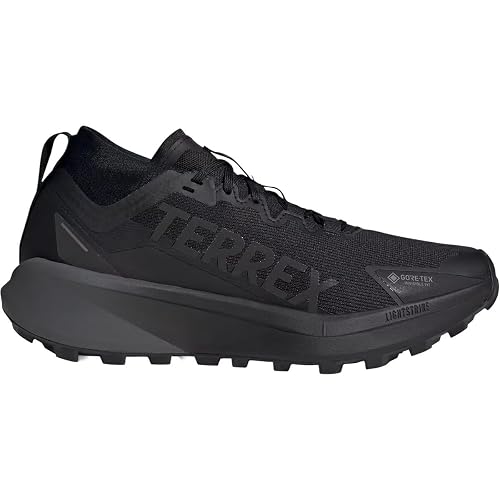
TERREX adidas Mens Terrex Agravic GTX Trail Running Sneakers Shoes – Black
The second is the adidas Mens Terrex Rockadia Hiking Shoe in grey. It is built more toward hiking and rugged walking than fast trail running, so it is a better fit for hikers who want a sturdy, rugged shoe rather than a running-focused trail shoe:

adidas Mens Terrex Rockadia Hiking Shoe Sneakers Shoes – Grey
If you want to see a wider selection of waterproof options before deciding, the roundup 7 Best Adidas GORE-TEX Trail Running Shoes for Wet Trails (2026) compares several models side by side.
FAQ
Are adidas GTX trail running shoes truly waterproof?
The GORE-TEX membrane is designed to block liquid water from entering through the upper, so the shoe handles rain and shallow puddles well. It cannot stop water that pours over the collar or enters through the top during deep wading. For most trail conditions, the protection is effective.
Do GTX trail shoes run hot?
Yes, relative to open mesh trail shoes. The membrane and lining reduce airflow, so the foot can feel warmer, especially in summer or on sustained climbs. Runners in cool or wet climates generally find this a fair trade.
How long does the break-in period take?
Most runners find a structured upper needs a few short runs before it feels comfortable. Plan on two to three weeks of progressively longer outings before relying on the shoes for long or hard sessions.
Should I size up in trail running shoes?
Many runners size up slightly in trail shoes to allow for foot swelling on long descents and to make room for thicker socks. Check the brand’s sizing guidance and measure your foot before deciding, since fit varies by individual.
Can I use these shoes on the road?
You can, but they are not designed for pavement. The lugged outsole wears faster on hard surfaces and the ride is firmer than a road shoe. Occasional road miles are fine; regular road running calls for a dedicated road shoe.
How should I clean and dry GTX trail shoes?
Rinse off mud with water once it has dried a bit, using a soft brush. Remove the insoles and stuff the shoes with paper towel or let them air dry at room temperature, away from direct heat, which can damage the adhesives and membrane.
Are these shoes good for wide feet?
Structured trail uppers often feel snug across the forefoot. Runners with wide feet should check the listing, read owner comments about width, and try the shoe on if possible before committing.
Is this a good first pair of trail shoes?
It can be, particularly for someone who runs in wet regions and wants stability. Newer trail runners may prefer a more forgiving, lighter option first. If you have any existing foot or ankle concerns, a podiatrist or running specialist can advise on the right support level.
Final Verdict
Is the adidas Terrex Agravic GTX worth buying?
For runners who train in wet, muddy, or stream-crossing conditions and want a secure, waterproof trail shoe from adidas, the Terrex Agravic GTX is a sound choice. Its strengths are its protective upper, stable fit, and trail-oriented outsole. Its limits are warmth, slower drying after deep wading, and a snug forefoot. If your running is mostly dry and warm, or you need a roomy toe box, a mesh trail shoe will likely serve you better.
Related reading
- Salomon Men's Speedcross 6 GTX Trail Running Shoes Review (2026)
- Salomon GTX Trail Running Shoes: 4 Best for Wet Trails (2026)
- Merrell GTX Trail Running Shoes: Fit, Traction, and How to Choose (2026)
About Caleb Morgan
Caleb Morgan is part of our editorial team and reviews and edits our running gear & races guides, checking product details against manufacturer specifications and owner feedback.


