
 By Caleb Morgan
Updated November 2026
The Salomon Speedcross 6 trail running shoes are built for runners who spend most of their time on loose, muddy, or technical terrain and want a secure, locked-down fit. If you run mostly on hard-packed dirt or pavement-adjacent paths, or you prefer a cushioned, highly protective ride for long road-to-trail days, you will probably find them too aggressive. Buy them if you want serious lugs for mud and scree, a snug heel and midfoot, and a shoe that stays put when the trail gets sloppy. Skip them if you need a wide forefoot, a soft cushioned feel for long distances, or a lightweight shoe for fast, runnable singletrack.

Salomon Men’s Speedcross Trail Running Shoes
Product Overview
The Salomon Men’s Speedcross Trail Running Shoes belong to the Speedcross line, a long-running family of Salomon trail shoes known for deep, widely spaced lugs and a tight, performance-oriented upper. This listing is the men’s version of the sixth iteration. Salomon positions the Speedcross as a shoe for technical, wet, and uneven terrain, where grip and foot lockdown matter more than maximum cushioning or light weight.
The shoe sits in the aggressive trail category. Its outsole is designed to bite into soft ground and shed mud, and its upper is meant to hold the foot firmly so it does not slide inside the shoe on steep descents or side-hill traverses. Runners who come from road shoes often notice the stiffer, more structured feel right away, which is intentional. The design favors stability and control over a plush, rolling ride.
The Speedcross has a reputation among trail runners as a grippy, secure option for off-camber and muddy routes. Because it is an established model with a long history, a good amount of owner feedback exists describing how it fits and performs across different conditions. The sections below draw on the product’s published specifications and recurring patterns in that feedback rather than on any personal testing.
Key Features & Specifications
The table below lists the characteristics that the product naming and the Speedcross line’s well-known design features support. Where a manufacturer figure is not something we can confirm with confidence, it is left out.
| Feature | What It Means for You |
|---|---|
| Product type | Men’s trail running shoe, built for off-road use |
| Category | Aggressive, technical trail (Speedcross line) |
| Outsole | Deep, widely spaced lugs for grip in mud, wet grass, and loose dirt |
| Upper | Structured, locked-down fit designed to hold the foot in place |
| Intended terrain | Muddy, wet, loose, or technical trails |
| Drop and weight | Check the official size chart and product page for current figures |
Manufacturers typically specify exact drop, stack height, and weight per size on the product page. Those figures can change between colorways and production runs, so confirm them there before you buy, especially if you are matching drop to your current shoes.
Pros & Cons
Pros
- Aggressive lug pattern that grips well in mud, wet roots, and loose gravel.
- Snug, secure heel and midfoot hold, which reduces foot slide on descents.
- Well-established model with a long track record and a large body of owner feedback.
- Good for runners who want a confident, stable feel on uneven or off-camber ground.
- Widely available in a range of sizes and colorways.
Cons
Performance Analysis
Traction is the core strength of this shoe. The deep, spaced lugs are designed to penetrate soft surfaces and clear mud, so the shoe tends to hold on wet rock, loose dirt, and slick root sections where shallower-lugged shoes can slip. Owners frequently describe confidence on steep, muddy climbs and braking on loose downhills, which is consistent with what the outsole design suggests.
Fit is the second major factor. The upper is built to lock the heel and midfoot, and many runners report that this keeps the foot from shifting during sharp cornering or long descents. The tradeoff is room. Runners with wide forefeet or high volume often report pressure across the toe box, and many recommend trying a half size up or checking whether a wider option in the same line is available.
Ride feel is firm and responsive rather than plush. Because the shoe is designed for technical ground, the cushioning is not the focus, and runners who log long road or gravel miles often say their legs feel more fatigued than in a softer shoe. The lugs can also feel noticeable on flat, hard surfaces, which is worth remembering if your routes mix in a lot of pavement or packed gravel roads.
Break-in is a practical consideration. The structured upper usually softens with a few runs, but the first outings can feel stiff. Owners who ran their first few sessions on shorter, easier routes generally reported a more comfortable experience than those who went straight into long, technical efforts.
Overall, the Speedcross 6 performs best in the conditions it was designed for. On soft, wet, or uneven terrain it inspires confidence, and on routine dry trails it can feel more than you need.
Who Should Buy This Product?
This shoe suits trail runners who regularly encounter mud, wet rock, snow-melt slush, loose scree, or steep, technical descents. It is a strong pick for runners who value traction and foot lockdown above all else, and for those who race or train on courses with challenging footing. Runners with narrow to medium forefeet and a neutral to stability-oriented stride often fit into it most comfortably.
You should skip this shoe if your running is mostly on smooth, dry singletrack, if you log high mileage on mixed pavement, or if you need a wide toe box. Runners with wide feet, those seeking maximum cushioning for long efforts, and beginners who mainly run gentle, groomed trails may be better served by a more forgiving option. If you have a specific foot condition or injury history, a physical therapist or sports medicine professional can help you decide whether an aggressive trail shoe is appropriate.
Buying Guide
Before you buy any trail shoe, start with where you run most. Aggressive lugs are a benefit on mud and loose ground but a drawback on hard-packed surfaces. A useful approach is to estimate the share of your weekly miles that fall into each surface type. If more than half are muddy, wet, or loose, an aggressive shoe is worth serious consideration.
Next, check fit carefully. Trail shoes are usually sized a half size up from your road size to allow room for descents and swelling. Stand up in the shoe, push your toes forward, and check for a thumb’s width of space in front of your longest toe. Test the heel for slip and the forefoot for pressure. If the toe box squeezes, consider a wider width or a different model.
Finally, think about drop, weight, and cushioning. Compare the drop of your current shoes with any new pair to avoid calf or Achilles strain during the transition. Confirm drop and weight on the product page, since these specifications vary by model and size.
If the Speedcross 6 is not the right fit for you, two well-known alternatives are worth a look:
- Salomon Women’s Speedcross Trail Running Shoes – the women’s version of the same aggressive lineup, with a fit and last designed for women’s feet.
- Salomon XA Pro 3D Men’s Trail Running and Hiking Shoes – a more versatile trail and hiking option for runners who want solid traction with a bit more everyday comfort.
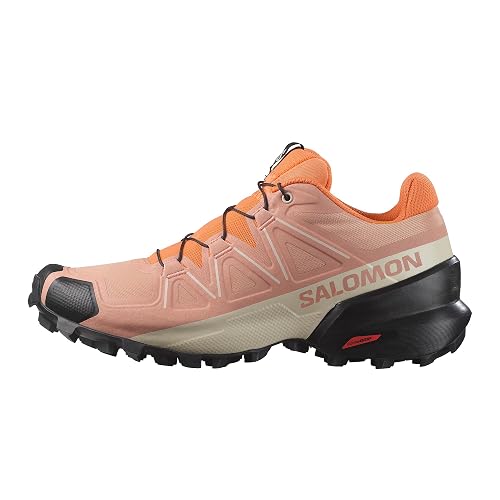
Salomon Women's Speedcross Trail Running Shoes

Salomon XA Pro 3D Men's Trail Running and Hiking Shoes
If you are still deciding between trail and road options, our guide to Road vs Trail Running Shoes covers the key differences, and Salomon Trail Running Shoes: How to Choose the Right Pair in 7 Steps walks through sizing and fit in more detail.
FAQ
Are Salomon Speedcross 6 trail running shoes good for muddy trails?
Yes. The deep, widely spaced lugs are designed for soft, wet, and muddy ground, and owners frequently cite confidence on slick terrain as one of the shoe’s main strengths.
Do Speedcross shoes run true to size?
Many runners find trail shoes fit best a half size up from their road size. Check the official size chart and try the shoes on with the socks you plan to run in when possible.
Are these shoes good for wide feet?
The forefoot is often reported as narrow. Runners with wide feet should check whether a wider width is offered and consider sizing up or trying a different model.
Can I use Speedcross shoes on the road?
You can, for short transitions, but the aggressive lugs can feel harsh on pavement and the firm ride is less comfortable for long road miles. A road-focused shoe is usually better for regular pavement running.
How long does break-in take?
Owners commonly report that the structured upper feels stiff at first and softens over several runs. Starting with shorter, easier outings helps.
Are Speedcross shoes good for beginners?
They can work well for beginners who run mainly on muddy or technical trails. Beginners who run mostly on groomed or dry paths may find a more cushioned, less aggressive shoe more comfortable.
What is the difference between the men’s and women’s Speedcross?
The women’s version is built on a fit designed for women’s feet, including shape and volume differences. Choosing the version that matches your foot shape is more important than choosing by gender alone.
Should I see a professional before buying?
If you have a foot or joint condition, a history of injury, or unusual gait concerns, consult a podiatrist, physical therapist, or sports medicine professional before choosing an aggressive trail shoe.
Final Verdict
The Salomon Speedcross 6 trail running shoes are a strong, purpose-built choice for runners who prioritize grip and lockdown on muddy, wet, and technical terrain. They excel where traction matters most and are less suited to cushioned road miles, wide forefeet, or fast, dry singletrack. Check your typical routes and fit needs first, and if the Speedcross is not quite right, the women’s Speedcross or the Salomon XA Pro 3D may be a better match.
Related reading
- Salomon Speedcross 6 GORE-TEX Trail Running Shoes Review: Who Is It For?
- Salomon Shoes Women Trail Running: Speedcross Review (2026)
About Caleb Morgan
Caleb Morgan is part of our editorial team and reviews and edits our running gear & races guides, checking product details against manufacturer specifications and owner feedback.


