By Caleb Morgan
Updated November 2026
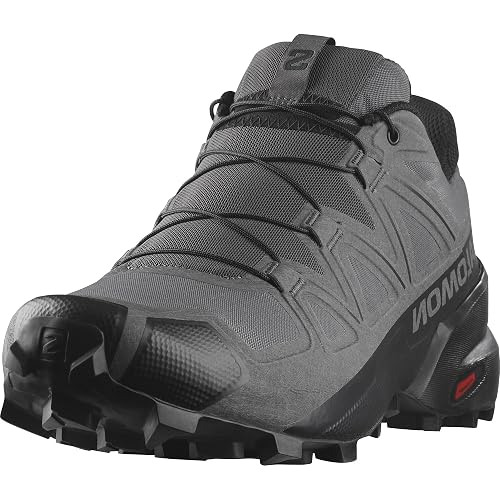
The best stability trail running shoes for overpronators share a few traits: a firm medial post or guide rail, a supportive heel counter, and a outsole that grips loose dirt without adding extra bulk. This guide walks you through how to confirm you overpronate, what features to prioritize on rugged terrain, and how to test a pair before you commit to long miles.
Confirm Your Pronation Pattern First
Overpronation means your foot rolls inward more than is efficient after the heel strikes. Before you shop, check your wear pattern. Look at the last 50 to 100 miles on a pair of road or trail shoes. Heavy wear along the inner edge of the heel and forefoot is a common sign. A wet-test footprint can also help: stand on a dry paper bag after stepping in water, then compare the imprint. A wide, flat arch usually indicates more inward roll. If you have pain in the shins, knees, or arches, a running-focused physical therapist or podiatrist can assess your gait properly.
Shopping for one? See our guide: Trail Running Shoes for Overpronators: 6 Best Picks for Every Trail (2026).
Choose the Right Stability Features for Trail Terrain
Stability on the road and stability on trails are not identical. On uneven ground, you need support that does not feel like a rigid brick under your foot. Look for these features:
- Medial post or guide rail: A firmer density along the inner midsole that slows inward roll without locking the foot in place.
- Heel counter: A stiff, well-shaped cup that keeps your heel from shifting on descents and side-hill traverses.
- Lugged outsole: Lugs of moderate depth give traction in mud and loose gravel. Very deep lugs can feel unstable on hard-packed sections.
- Rock plate: A thin protective layer between midsole and outsole helps on rocky paths, though some stability models omit it to keep weight down.
Test Fit and Stability on Trail-Like Surfaces
Fit matters as much as support. Shop in the afternoon, when feet are slightly swollen, and wear the socks you plan to run in. Follow these steps:
- Leave about a thumbnail’s width (roughly half an inch) of space at the toe.
- Lace the shoe snugly at the midfoot and tighten the heel lock without pinching.
- Walk and jog on the store floor, then check for heel slip or side-to-side sliding.
- Stand on one leg for 30 seconds. Notice whether your ankle collapses inward.
- If the store has a ramp or incline, try a few steps on it to check heel hold on descents.
Pay attention to any pressure points on the inner ankle or top of the foot. A stability shoe should feel controlled, not squeezed.
Plan a Gradual Transition
New shoes change how load moves through your legs. Start with short runs on mixed terrain, perhaps 20 to 30 minutes, and increase gradually over two to three weeks. Keep a rotation if you can, using your current pair on easy days. Track any new soreness in the calves, Achilles, or arch. Persistent pain is a reason to pause and consult a sports medicine professional.
Recommended gear
- Stability trail shoes with a medial post: the core purchase for controlling inward roll on uneven ground. View on Amazon
- Replacement insoles designed for arch support: useful if your current shoe fits well but needs a bit more arch control. View on Amazon
- Moisture-wicking running socks with a snug heel: they reduce friction and help the heel stay locked in. View on Amazon
Common Mistakes
- Choosing the most cushioned shoe without checking whether it actually offers stability.
- Buying a half size too small to avoid heel slip, which can cause toe bruising on descents.
- Ignoring how the shoe feels on your typical terrain, not just the store floor.
- Switching to new shoes for a race without any training miles in them.
- Continuing to run through persistent pain instead of getting a professional gait assessment.
FAQ
Do I need stability shoes if I only run on dirt paths?
Not always. Mild overpronators on smooth, moderately flat trails may do well in a neutral shoe with a secure heel. If you feel your ankle rolling inward or notice inner-edge wear, a stability shoe is the safer starting point.
How long do stability trail shoes typically last?
Many runners replace trail shoes after roughly 300 to 500 miles, though rocky terrain and wet conditions can shorten that range. Check the midsole for compression and the outsole for smoothed lugs as signs of wear.
Can I use custom orthotics with stability shoes?
Yes, some runners do. Fit can change, so test the combination on a short run first. A podiatrist can recommend whether custom orthotics suit your foot structure.
Conclusion
The best stability trail running shoes for overpronators combine a firm medial post, a secure heel counter, and grip suited to your local terrain. Confirm your pronation pattern, test fit on a slope if possible, and transition gradually. If pain persists, consult a running-focused podiatrist or physical therapist before adjusting your training.
Related reading
- Women's Trail Running Shoes ASICS: 3 Best Picks for Every Trail (2026)
- Winter Running Trail Shoes: 6 Best Picks for Cold, Wet Trails (2026)
- Trail Running Shoes Vibram: 3 Best Picks for Every Trail (2026)
Ready to choose one?
About Caleb Morgan
Caleb Morgan is part of our editorial team and reviews and edits our running gear & races guides, checking product details against manufacturer specifications and owner feedback.