
 By Caleb Morgan
Updated November 2026
Low profile trail running shoes sit closer to the ground than most trail models, which gives you better ground feel and a more direct connection to the trail. This guide compares five picks based on stack height, drop, outsole grip, fit and how each one is typically described by owners. Read on to match a pair to your terrain and foot shape.
Best overall: ALTRA Men’s Lone Peak 9 Trail Running Shoe – View on Amazon
Best for rocky, technical terrain: Xero Shoes Women’s Scrambler Low EV Trail Running Shoes – View on Amazon
Best for a minimal, flexible feel: Xero Shoes Men’s Mesa Summit Trail Shoe – View on Amazon
Best for wet, muddy trails: Arc’teryx Vertex Speed Low Shoe Men’s – View on Amazon
Best for wide feet: NORTIV 8 Men’s Trail Running Shoes Wide Toe Box – View on Amazon
Our Top Picks
Quick Comparison
| Product | Best for | Key feature |
|---|---|---|
| ALTRA Men’s Lone Peak 9 Trail Running Shoe | Overall versatility | Zero-drop, cushioned platform |
| Xero Shoes Women’s Scrambler Low EV Trail Running Shoes | Rocky, technical terrain | Thin, flexible sole |
| Xero Shoes Men’s Mesa Summit Trail Shoe | Minimal, flexible feel | Lightweight barefoot-style build |
| Arc’teryx Vertex Speed Low Shoe Men’s | Wet, muddy trails | Aggressive lugged outsole |
| NORTIV 8 Men’s Trail Running Shoes Wide Toe Box | Wide feet | Roomy forefoot toe box |
ALTRA Men’s Lone Peak 9 Trail Running Shoe

ALTRA Men's Lone Peak 9 Trail Running Shoe
Best for: Overall versatility on mixed trails
This is a solid starting point for runners moving from road shoes to trails who want a low, even platform without a harsh transition. Its zero-drop geometry keeps the heel and forefoot level.
Pros
- Zero-drop platform suits natural stride mechanics
- Wide forefoot room for splayed toes
Cons
- Less protection on very sharp, rocky descents
Xero Shoes Women’s Scrambler Low EV Trail Running Shoes
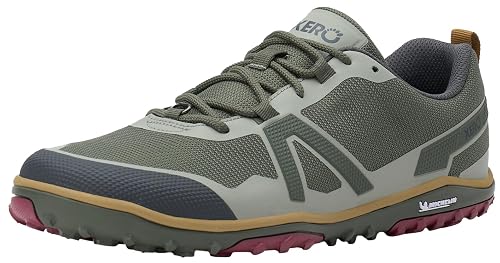
Xero Shoes Women's Scrambler Low EV Trail Running Shoes
Best for: Rocky, technical terrain
Suited to runners who want to feel the trail underfoot and are comfortable with a thin layer between foot and ground. Owners often describe it as agile on loose rock.
Pros
- Thin, flexible sole for close ground contact
- Lightweight for quick turnover
Cons
- Limited cushioning on long, hard runs
Xero Shoes Men’s Mesa Summit Trail Shoe

Xero Shoes Men's Mesa Summit Trail Shoe
Best for: Minimal, flexible feel
Best for experienced runners who already train in minimal footwear and want a flexible, low-profile option for moderate trails.
Pros
- Flexible build that bends with the foot
- Lightweight and low to the ground
Cons
- Requires a transition period for newer minimalist runners
Arc’teryx Vertex Speed Low Shoe Men’s

Arc'teryx Vertex Speed Low Shoe Men's
Best for: Wet, muddy trails
Aimed at runners who face soft, slick ground and want a lower-profile shoe with more bite than a typical road-to-trail hybrid.
Pros
- Aggressive lugs for wet grip
- Low stack keeps the feel connected
Cons
- Lugs can feel stiff on hard-packed surfaces
NORTIV 8 Men’s Trail Running Shoes Wide Toe Box

NORTIV 8 Men's Trail Running Shoes Wide Toe Box
Best for: Wide feet
A practical choice for runners who find standard trail shoes pinch the forefoot and want a roomier, lower-profile fit.
Pros
- Wide toe box for natural toe splay
- Budget-friendly option in the category
Cons
- Outsole grip may trail premium models on technical descents
Buying Guide
Stack height and drop
Stack height is the cushioning between your foot and the ground, and drop is the height difference between heel and forefoot. Lower stack and lower drop generally mean more ground feel and less protection, so match them to how much impact you can handle on hard trails.
Outsole lug depth
Deeper lugs grip mud and loose dirt better, while shallower lugs feel smoother on packed trail and pavement. Check the lug pattern against the surfaces you run most often.
Toe box width
A roomy toe box lets your toes spread during push-off, which can matter on long descents. If your feet feel cramped in narrow shoes, prioritize a wider last.
Flexibility and weight
Flexible midsoles conform to uneven ground, while lighter shoes reduce fatigue over distance. Balance these against the protection you need on rocky routes.
Good picks for this: Xero Shoes Men’s Mesa Summit Trail Shoe, ALTRA Men’s Lone Peak 9 Trail Running Shoe
FAQ
Are low profile trail running shoes good for beginners?
They can be, but beginners often do better with moderate cushioning while their feet and calves adapt. Build up slowly, especially if you are moving from heavily cushioned road shoes.
Related reading
- Zegama 2 Trail Running Shoes: Fit, Traction, and Who They Suit (2026)
- Xero Trail Running Shoes: Fit, Traction, and How to Choose a Pair
- Women's Trail Running Shoes ASICS: 3 Best Picks for Every Trail (2026)
- Women's New Balance Trail Running Shoes: How to Choose the Right Pair
- Women's Merrell Trail Running Shoes?
- Winter Running Trail Shoes: 6 Best Picks for Cold, Wet Trails (2026)
About Caleb Morgan
Caleb Morgan is part of our editorial team and reviews and edits our running gear & races guides, checking product details against manufacturer specifications and owner feedback.


