
 By Caleb Morgan
Updated November 2026
The adidas Terrex Agravic GTX trail running shoes are built for runners who want a waterproof, grippy shoe for wet, muddy and technical terrain. This review looks at the listing for the brown colorway, the specifications the manufacturer publishes, and the patterns owners tend to mention. Buy them if you run in rain, snow melt or mud on a regular basis and want a shoe that keeps your feet dry without a lot of extra bulk. Skip them if you mostly run on smooth roads, want a very light racing flat, or need an extremely wide toe box.

adidas Mens Terrex Agravic GTX Trail Running Sneakers Shoes – Brown
Product Overview
The Agravic line is adidas’ trail franchise aimed at runners who need traction and protection more than cushioning for its own sake. This particular listing is the men’s version of the Terrex Agravic GTX, finished in brown, and it uses the GORE-TEX membrane that gives the model its “GTX” name. Like most trail shoes in this category, it is meant to handle loose gravel, roots, mud and wet rock, with an outsole pattern designed to bite into soft ground.
The GTX designation tells you the upper includes a waterproof, breathable membrane laminated behind the mesh or synthetic layers. That membrane is the main reason to choose this version over a non-waterproof Agravic. It keeps out surface water and wet grass, though it also means the shoe will run warmer and hold more heat than an open mesh trainer. For a deeper look at how the Agravic family compares, see our piece on Terrex Agravic GTX Trail Running Shoes Review: Who Is It For?, which covers the same model family from a buyer’s angle.
Because the listing is for a specific colorway of an established product line, the core construction is consistent across the family. Anything beyond the basics, such as exact drop, stack height or weight for your size, should be confirmed on the official size chart before you buy, since manufacturers adjust these details between production runs.
Key Features & Specifications
The table below lists the features that the product name and the well-known design of this model make clear. Where a detail varies by size or production batch, we have left it out rather than guess.
| Feature | What It Means for You |
|---|---|
| Model line | Terrex Agravic, adidas’ trail running series |
| Waterproofing | GORE-TEX (GTX) membrane for waterproof, breathable protection |
| Gender | Men’s sizing |
| Colorway | Brown |
| Intended surface | Trail, including wet, muddy and loose terrain |
| Outsole | Multi-directional lugs designed for grip on soft ground |
| Closure | Lace-up, for a locked-in midfoot and heel fit |
Check the official size chart for exact measurements such as drop, stack height and weight. Sizing in trail shoes can also vary by width, so compare your foot length and width against the chart rather than relying on your usual road shoe size.
Pros & Cons
Pros
- GORE-TEX membrane keeps water out during rain, puddles and wet grass.
- Trail-focused outsole designed for traction on mud, loose dirt and wet rock.
- Lace-up closure lets you adjust midfoot and heel lockdown.
- Sturdy upper suited to rough terrain and brush contact.
- Part of a well-established trail line, so the fit and construction are familiar to many runners.
Cons
Performance Analysis
Trail shoes are judged mostly on three things: how well they grip, how well they protect and how they fit over distance. The published design of this model points to a shoe that leans toward protection and grip. The GORE-TEX membrane is the headline feature, and its job is simple: keep water out so your socks and feet stay dry through puddles, wet roots and rain. For runners training in wet climates, that alone can be the deciding factor.
Owners of GTX trail shoes in general tend to report that waterproofing works well in light and moderate rain and shallow water. The trade-off they often describe is heat and moisture buildup on warm days. A waterproof membrane is breathable, but it is not as breathable as a pure mesh upper, so feet can feel warm during summer efforts. Many runners manage this by choosing a non-GTX shoe for hot weather and keeping the GTX pair for cold, wet conditions.
Traction is the other major factor. Multi-directional lugs on the outsole are designed to grab soft ground and provide stability on slopes. Runners generally find this type of outsole secure on dirt, mud and loose gravel, though very deep, sticky mud can still clog any lug pattern. On hard-packed trail or pavement sections, the grip is adequate but not the main strength of the shoe.
Weight and cushioning are where the shoe asks for compromise. Waterproof trail shoes are typically heavier than their lightweight counterparts, and the extra weight becomes noticeable on long, fast runs. If your goal is a race-day shoe for a fast, dry course, a lighter option will likely feel better. For steady training on technical wet trails, the added protection usually earns its place.
Fit deserves attention. Trail shoes often need a snug heel and secure midfoot, and the lace-up design helps with that. Runners with narrower feet tend to find a locked-in fit, while those with wider forefeet sometimes report pressure across the toe box, especially after long descents when feet swell. Trying the shoe on in the afternoon, when feet are slightly larger, is a common recommendation.
Who Should Buy This Product?
This shoe suits trail runners who regularly face wet and muddy conditions. If you train in a region with frequent rain, run through wet grass at dawn, or cross streams on your routes, the GTX membrane is a meaningful benefit. It also suits hikers-turned-runners and multi-sport athletes who want one shoe for varied off-road work in cool or wet weather.
You should probably skip this pair if you run mainly in hot, dry climates, where a breathable mesh shoe will keep you more comfortable. Racers chasing lightweight race-day options will likely prefer a lighter model. Runners with wide feet should try the shoe on before committing, since the fit is not generous in the forefoot. Anyone who mostly runs on paved roads will find a trail shoe with aggressive lugs unnecessary.
Buying Guide
Choosing a trail shoe comes down to terrain, climate and fit. Start by thinking about where you run most of the time. If you spend more than half your runs in rain, mud or wet grass, a GTX model is worth prioritizing. If you run mostly in heat or on dry trails, skip the waterproof membrane and look at a breathable option instead.
Next, check your fit. Measure your foot length and width, compare against the manufacturer’s size chart, and consider buying a half size up if you tend to swell on long runs. Pay attention to the heel lock and midfoot hold when you lace the shoe. A well-fitting trail shoe should feel secure without pinching the forefoot.
Finally, consider the alternatives in the same family. Two other well-known options are worth comparing, depending on whether you want a different colorway, a different fit or a different waterproof configuration:
- adidas Terrex Terrex Agravic GTX Trail Running Shoe Blanch Cargo/Alumina/Putty Beige 12.0 – A lighter-toned version of the GTX Agravic, suitable if you prefer a neutral color palette.
adidas Terrex Terrex Agravic GTX Trail Running Shoe Blanch Cargo/Alumina/Putty Beige 12.0
- TERREX adidas Mens Terrex Agravic GTX Trail Running Sneakers Shoes – Black – The same GTX construction in black, a practical choice for runners who want a darker, more understated shoe.
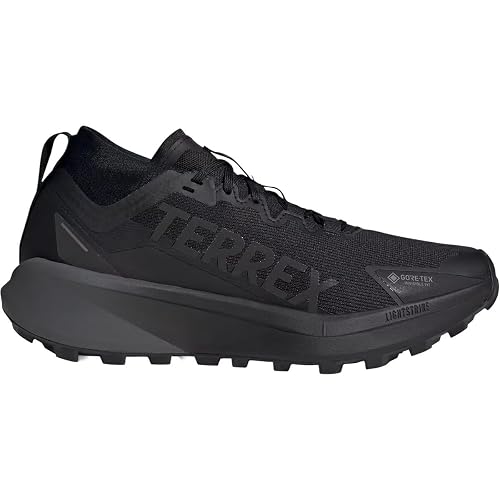
TERREX adidas Mens Terrex Agravic GTX Trail Running Sneakers Shoes – Black
For broader comparisons across the Agravic range and other waterproof trail shoes, you can also read 7 Best Adidas Men's Terrex Agravic 3 Trail Running Shoes for Every Trail (2026) and Salomon GTX Trail Running Shoes: 4 Best for Wet Trails (2026).
FAQ
Are the adidas Terrex Agravic GTX trail running shoes truly waterproof?
The GTX designation means the upper uses a GORE-TEX membrane, which is designed to block water while allowing some vapor to escape. It handles rain, puddles and wet grass well. Deep water crossings above the top of the shoe will still let water in over the collar, so think of it as water resistance for typical trail conditions rather than full submersion protection.
Do GTX trail shoes run hot?
They generally run warmer than open mesh trail shoes because the membrane limits airflow. Many runners find them comfortable in cool and wet weather and too warm in summer heat. If you run in warm conditions often, consider a breathable non-GTX model for those days.
Should I buy a half size up?
That depends on your foot shape and how much your feet swell. Many trail runners choose a half size up to leave room for descents and longer efforts. Measure your foot and compare against the official size chart, then try the shoe on later in the day if possible.
Are these shoes good for road running?
They are designed primarily for trail use. The aggressive lugs and protective upper make them less ideal on hard pavement, where a road shoe will feel smoother and lighter. Occasional road sections are fine, but frequent road running is better served by a dedicated road shoe.
How do I clean and care for waterproof trail shoes?
Rinse off mud and debris after runs, let the shoes air dry away from direct heat, and avoid putting them in a hot dryer, which can damage the membrane and adhesives. A soft brush and mild soap are usually enough. Check the manufacturer’s care instructions for specific guidance.
How long do GTX trail running shoes last?
Lifespan depends on mileage, terrain and how often the shoes are exposed to grit and moisture. Many runners replace trail shoes after several hundred miles, though the outsole and midsole wear at different rates. Check the outsole lugs and midsole compression as signs it may be time for a new pair.
Is a waterproof shoe a good choice for winter running?
Yes, for many runners in cold, wet climates the membrane helps keep feet dry during slush and snowmelt. Pair them with moisture-wicking socks to manage sweat, since waterproof uppers can trap perspiration. If you run in deep snow or extreme cold, consider specialized winter footwear.
Where should I go if I have foot problems or injuries?
If you have persistent foot pain, a previous injury or a condition that affects your gait, consult a podiatrist, sports medicine doctor or a qualified running shoe fitter before choosing footwear. They can recommend fit and support features suited to your needs.
Final Verdict
The adidas Terrex Agravic GTX trail running shoes are a solid choice for runners who need waterproof protection and reliable grip on wet, muddy and technical trails. The GORE-TEX membrane and trail-focused outsole are the core strengths, while the added warmth, weight and firm forefoot fit are the main compromises. If your running regularly involves rain and mud, this is a practical pick. If you train in heat or want a featherweight racer, look elsewhere. Check the size chart carefully and try them on if you can.
Related reading
- Adidas Terrex Agravic Speed Ultra Trail Running Shoes Review: Who Is It For?
- 7 Best Adidas Men's Terrex Agravic Speed Trail Running Shoes Compared (2026)
- 5 Best Adidas Men's Terrex Agravic Speed Ultra Trail Running Shoes (2026): Our Picks
- 4 Best Adidas Terrex Agravic 3 Trail Running Shoes Compared (2026)
- Terrex Agravic Speed Ultra 2 Trail Running Shoes Review: Is It Worth It?
About Caleb Morgan
Caleb Morgan is part of our editorial team and reviews and edits our running gear & races guides, checking product details against manufacturer specifications and owner feedback.


