By Emily Parker
Updated November 2026
The nathan adjustable fit zipster 2.0 running belt is a zippered waist pack aimed at runners, walkers and hikers who want a few essentials carried close to the body without bounce. It suits people who carry a phone, keys and a small amount of gear on training runs and want a fit they can adjust without fuss. It is a weaker choice for anyone who needs to carry a full hydration bladder, a large phone in a heavy case, or several bottles at once, since the design is built for light, compact loads. Buyers who want a simple, adjustable belt for everyday running should find it worth considering. Those who need serious hydration capacity or race-day bottle carry should look at a dedicated hydration belt instead.

Nathan Running Belt Adjustable Fit Zipster, Zippered, Weather-Resistant Pocket & Two Quick-Stash Pockets for Running Gear, Running Fanny Pack, Walking, Hiking, Gym
Product Overview
The Nathan Running Belt Adjustable Fit Zipster is part of Nathan’s Zipster line, a family of waist packs built around a main zippered pocket, a second quick-access area and an adjustable waistband. The product listing describes it as a zippered, weather-resistant pocket setup with two quick-stash pockets, positioned for running, walking, hiking and gym use. The “2.0” in the keyword refers to the updated adjustable version of the Zipster design, which is marketed as easier to dial in than earlier fixed-size belts.
The overall concept is a low-profile fanny pack that sits at the small of the back or at the front of the hips. The goal is to keep the load from bouncing on each stride, which is the most common complaint runners have about waist packs. Because this is a research-based review, the observations below draw on the listed specifications and on patterns that owners commonly describe, not on any hands-on testing.
Key Features & Specifications
The table below lists only the features named in the product title and well-established characteristics of this Zipster model. Exact dimensions and capacity figures should be confirmed on the product page before buying.
| Feature | What It Means for You |
|---|---|
| Adjustable fit | The waistband can be sized to fit a range of waist sizes, so one belt can be shared or adjusted as your fit changes. |
| Zippered main pocket | Keeps keys, a phone or cards secure during movement and in light rain. |
| Weather-resistant pocket | Offers some protection from moisture; it is not a waterproof bag for submersion. |
| Two quick-stash pockets | Provide fast access to small items like gels or a card without opening the main zipper. |
| Bounce-reduced design | The low-profile shape is intended to limit movement against the body during running. |
| Intended uses | Running, walking, hiking and gym sessions. |
Pros & Cons
Pros
- Adjustable waistband makes it easier to find a secure fit across different body sizes.
- Zippered main pocket keeps small valuables from falling out during a run.
- Quick-stash pockets make it simple to grab a gel or card mid-run.
- Weather-resistant material helps with light rain and sweat.
- Works across several activities, from trail walks to gym sessions.
Cons
- Capacity is limited; it is not suited to large phones in thick cases plus extra gear.
- Not designed to carry a full hydration bladder or multiple bottles.
- Some owners report the fit can feel snug on the first wear before settling in.
- Weather resistance is not the same as waterproofing, so it is not for wet-weather storage of electronics.
Performance Analysis
Performance for a waist pack comes down to three things: how little it moves, how securely it holds its contents, and how easily you can reach them. Based on the listed design, the zippered main pocket addresses the security question well, since small items are kept enclosed rather than sitting in an open compartment. The quick-stash pockets address access, letting you retrieve a gel without stopping to open a zipper.
Bounce control is the area where owners of this style of belt tend to be most divided. A waist pack that sits close to the body and is sized correctly generally stays steady at easy paces. At faster tempo efforts or on rough trails, even a well-fitted belt can shift slightly. Runners who load the pack heavily tend to notice more movement than those carrying only a phone and a key. Keeping the load light and centered is the simplest way to control bounce.
Comfort depends heavily on fit. The adjustable waistband gives you a wider window of sizes than a fixed-size belt, but the belt still needs to sit firmly without digging in. Owners generally recommend tightening it until it stops moving, then checking that you can breathe and move freely. Durability and weather resistance should be read as everyday resistance to sweat and light moisture, not as protection against heavy rain or immersion.
Who Should Buy This Product?
This belt makes the most sense for runners who carry a small set of essentials: a phone, keys, a card and perhaps a gel or two. It also suits walkers and hikers who want hands-free storage on short outings, and gym-goers who need a secure place for personal items during a workout. If your priority is a compact, adjustable waist pack that stays out of the way, it fits that role well.
You should skip this belt if you need to carry a large phone in a rugged case alongside a hydration system, if you run long distances in heavy rain and need fully waterproof storage, or if you race with several bottles or a bladder. Runners in those situations will be better served by a dedicated hydration belt or a larger pack.
Buying Guide
Before buying any running waist pack, check four things: the size of your largest item, how much weight you plan to carry, the fit method, and how you will wear it. Measure the phone you carry, including its case, and confirm it fits the main pocket with room to spare. Think about whether you need quick access on the move or whether everything can stay zipped until a stop.
- Measure your waist and your items. Take a waist measurement at the point where the belt will sit, and measure your phone with its case.
- Decide on load. Light loads of one to three small items suit a standard Zipster style. Heavier or bulkier loads may need a larger design.
- Choose your wear position. Many runners wear these at the small of the back for minimal bounce; others prefer the front for easy access. Both are common.
- Check the fit method. Adjustable belts offer more flexibility if your waist changes or you share gear.
If this model does not match your needs, two well-known alternatives are worth comparing. The Nathan Zipster Max is a larger option designed for runners who want more room in the zippered pocket and extra smartphone storage. The standard Nathan Zipster Running Belt is a more compact, fixed-size choice for those who want a simpler belt.
Nathan Zipster Max Running Belt, with an extra large zipper pocket and smartphone storage, suits runners who carry more than the basic essentials.
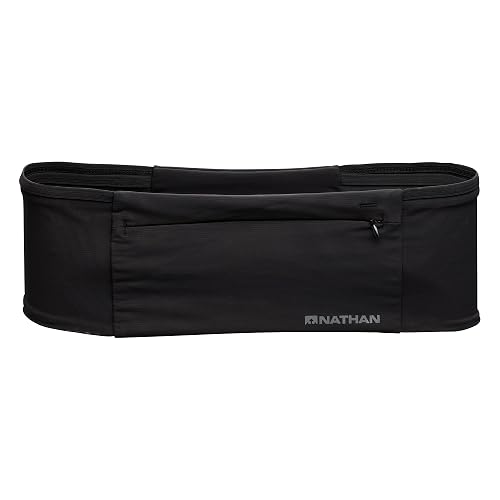
Nathan Zipster Max Running Belt, Running Belts for Women and Men, Bounce-Free Waist Pack with Extra Large Zipper Pocket, Smartphone Storage, Walking, Gym, Hiking
Nathan Zipster Running Belt for Men and Women, a bounce-free waist pack with zippered pockets, is a straightforward option for runners who want a classic design that fits a standard smartphone.

Nathan Zipster Running Belt for Men and Women, Bounce Free Waist Pack, Running Fanny Pack Women, Pockets with Zippers, Fits All iPhones
For more guidance on sizing, see Lululemon Running Belt Size Guide: How to Pick the Right Fit in 5 Steps and How Tight Should a Running Belt Be? A Simple Fit Guide. Runners who want a broader comparison can also check 6 Best Nathan Zipster Running Belt Options for Every Run (2026) and Wirecutter Best Running Belt: 7 Top Picks Compared (2026).
FAQ
Can the Nathan adjustable fit Zipster 2.0 hold a phone?
Yes, the main zippered pocket is designed to hold a standard smartphone. Measure your phone with its case before buying, since thick cases can make the pocket feel tight.
Is this belt waterproof?
No. The pocket is weather-resistant, which handles sweat and light rain, but it is not designed for submersion. Do not rely on it to protect electronics in heavy rain.
Where should I wear a running belt?
Many runners wear it at the small of the back to reduce bounce, while others prefer the front for quicker access. Try both positions on a short run to see which feels more stable for you. See Do You Wear Running Belt in Front or Back? Fit and Comfort Tips for more.
How tight should the waistband be?
Tighten it until the belt stops shifting, but not so much that it digs in or restricts breathing. You should be able to move freely through a full stride.
Can I carry a hydration bottle in it?
This design is built for light, compact items rather than full bottles or a hydration bladder. If you need to carry water, a dedicated hydration belt is a better match.
Will it fit during a race?
Many runners use waist packs for training and some for races, but check event rules, since some races limit what you can wear. Light essentials usually fit within those rules.
Is it suitable for walking and hiking as well?
Yes, the listing names walking, hiking and gym use. It works well for short outings where you want hands-free storage for a phone, keys and a snack.
Final Verdict
The nathan adjustable fit zipster 2.0 running belt is a sensible pick for runners and walkers who carry light essentials and want a secure, adjustable waist pack. Its zippered main pocket, quick-stash pockets and weather-resistant material cover the everyday needs most people have. Its limits are capacity, bladder-free hydration and true waterproofing, so match it to a light load and you should be satisfied. Runners with heavier gear should compare it against the larger Zipster Max before deciding.
Before you buy: helpful guides
About Emily Parker
Emily Parker is part of our editorial team and reviews and edits our running gear & races guides, checking product details against manufacturer specifications and owner feedback.