By Caleb Morgan
Updated November 2026
Trail running shoes for wide feet are easier to find than most runners expect, but picking the right pair takes a little more work than grabbing your usual size. In this guide, you’ll learn how to measure your feet accurately, what width and toe box designs to look for, how to test fit at home, and which mistakes to avoid. By the end, you’ll know how to narrow the options to a short list that suits your foot shape and your terrain.
Why Wide Feet Need Different Trail Shoe Features
Road shoes and trail shoes are built differently. Trail models usually have a more structured upper, a firmer outsole, and a rock plate or protective layer underfoot. Those features can make a standard-width shoe feel tight across the forefoot, especially once your feet swell on long descents. A wide foot also tends to spread more under load, so the shoe has to accommodate that spread without letting your heel slide.
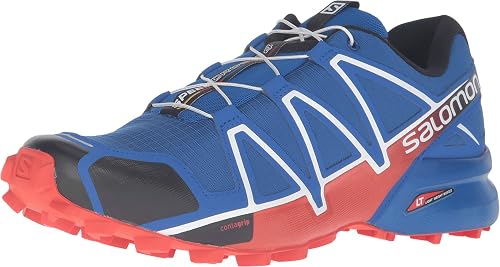
Shopping for one? See our guide: 6 Best Widest Trail Running Shoes for Wide Feet (2026).
Many trail brands offer a wide version of their popular models, usually labeled with a “W” or “2E” suffix for men, or a “D” or “wide” designation for women. Some brands cut their lasts wider from the start, which means the shoe is roomier throughout the forefoot rather than just at the widest point.
Step 1: Measure Your Feet Correctly
Measuring at home takes about five minutes and gives you a far better starting point than guessing from your road shoe size.
- Measure in the afternoon or evening, when feet are at their largest.
- Stand on a sheet of paper against a wall and trace the outline of each foot, holding the pen vertically.
- Measure the length from the heel to the tip of the longest toe. Measure the width across the widest part of the forefoot, usually just behind the toe joints.
- Compare both feet and use the larger measurement.
- Check the brand’s size chart, since sizing varies between manufacturers.
If your width measurement falls near the top of a standard range, a wide model is often the better choice. Measure again if you have doubts, and consider a professional fitting at a running specialty store for a second opinion.
Step 2: Understand Width Labels and Toe Box Shape
Width labels are not standardized across brands. A “wide” in one line may be roughly equal to a “2E” in another. Before you buy, look at the brand’s sizing guide, which usually lists the width in millimeters at the ball of the foot. Compare that number to your own measurement.
The toe box matters as much as the overall width. A wide forefoot with a tapered toe box can still cramp your toes on downhill runs, when your foot slides forward inside the shoe. Look for a rounded or square toe box and enough vertical space that your toes can splay slightly.
Key Fit Points to Check
| Area | What to Look For | Why It Matters |
|---|---|---|
| Forefoot width | Wide or 2E-equivalent last | Prevents pinching across the ball of the foot |
| Toe box height | Room for toes to spread | Reduces pressure and black toenails on descents |
| Heel counter | Firm but not restrictive | Keeps the heel stable on uneven ground |
| Midfoot lockdown | Adjustable laces or a secure upper | Limits sliding and irritation |
Step 3: Compare Upper Materials and Lacing Systems
Wide feet often do best with uppers that have some stretch or give in the forefoot. Engineered mesh with reinforced overlays is common on trail shoes and can accommodate a broader foot while still protecting against rock strikes. Lacing matters too. Runners with wider feet frequently benefit from a lacing system that lets them loosen the forefoot and tighten the midfoot separately, sometimes by skipping eyelets or using a window lacing technique.
Gusseted tongues help keep debris out and can add to the snug, secure feel that stops your foot from moving sideways on off-camber trails.
Step 4: Test Fit the Right Way
When you try on trail shoes, wear the socks you run in, and bring your own insoles if you use them. Stand, walk, and if possible, walk on a slight incline or use the store’s ramp. Check these points:
- You can wiggle all toes without the shoe pressing on them.
- There is roughly a thumb’s width of space between your longest toe and the front of the shoe.
- The ball of your foot sits in the widest part of the shoe without pinching.
- Your heel does not lift more than slightly when you walk.
- No pressure points appear along the sides or top of the foot.
Shoes often need a short break-in period. Expect a little more room to feel necessary after a few runs as the materials settle, but do not buy a shoe that is painful from the first step.
Step 5: Consider Your Terrain and Running Style
Where you run shapes the right shoe. Runners on rocky, technical routes usually want more protection and a firmer midsole. Those on smoother dirt or mixed surfaces may prefer something lighter and more flexible. If you race or run long distances, consider cushioning and drop, and pay attention to how your feet feel after longer efforts. Wide-footed runners often find that a stable platform with a secure fit beats a highly cushioned shoe that lets the foot slide.
If you overpronate or have a specific gait concern, a footwear specialist or podiatrist can help you choose a stability-oriented model. A podiatrist can also address foot pain or recurring problems, so consult one if you have ongoing discomfort.
Common Mistakes to Avoid
- Buying a half size or full size up instead of choosing a wide last. A longer shoe does not fix a narrow forefoot and can cause the heel to slip.
- Judging fit while standing still. Trail shoes need testing on slopes, since feet move forward on descents.
- Ignoring the toe box. A roomy width with a tight toe area can still cause blisters and lost toenails.
- Assuming all brands use the same width scale. Always check the size chart.
- Running a brand-new pair on a long, technical route without a few shorter test runs first.
Tips for Choosing Wide Trail Shoes
- Start your search by filtering for wide or 2E options from brands you already know.
- Read owner reviews that mention width specifically, since they reveal how a shoe fits in practice.
- Shop later in the day, when feet have swollen naturally.
- Keep the receipt and plan a test run on trails you know well, so you can return the pair if something feels wrong.
- Replace worn shoes on schedule. Outsole and midsole breakdown can change the way a shoe supports a wide foot.
Recommended gear
A few supporting items can make a wide-footed runner’s trail setup more comfortable. Look for the following types of products.
- Wide-fit trail running shoes with a rock plate: A shoe built on a wide last with a protective plate helps wide feet stay stable on rocky terrain. View on Amazon
- Trail running socks with cushioned forefoot padding: Padded socks reduce friction on long runs and help the shoe fit feel snug without rubbing. View on Amazon
- Replacement insoles with a deeper forefoot shape: Aftermarket insoles can add support and take up a little extra volume in the shoe. View on Amazon
- A foot measuring device: A Brannock-style foot measuring device gives a more precise length and width reading than a paper tracing. View on Amazon
FAQ
Do wide trail running shoes come in standard sizes?
Yes. Most brands offer wide versions of their popular trail models, usually in the same length sizes but with a wider last. Check the brand’s sizing guide because width labels differ.
Should I buy a bigger size if my feet are wide?
Not usually. Going up a full size adds length you may not need and can cause heel slippage. A wide width in your normal length is often the better fit.
How do I know if a trail shoe is too narrow?
Signs include pinching at the ball of the foot, numbness or tingling in the toes, pressure on the sides of the forefoot, and toenail bruising after downhill runs.
Are wide trail shoes less stable than standard ones?
Not necessarily. A well-designed wide last with a secure midfoot and heel counter can be just as stable. Stability depends on the whole shoe, not width alone.
How long should wide trail shoes take to break in?
Many runners feel the fit settle within the first few runs, though the exact timing depends on the materials and your foot. Discomfort that persists after several runs is a sign the fit may be wrong.
Can I use aftermarket insoles with wide trail shoes?
Yes, but check that the insole does not crowd the toe box. Replacement insoles with a flatter profile are often a safer choice.
When should I see a professional about foot pain?
If you have persistent pain, numbness, swelling, or recurring blisters, consult a podiatrist or a qualified sports medicine professional before assuming the problem is simply the shoe.
Conclusion
Finding trail running shoes for wide feet comes down to measuring accurately, understanding how each brand labels width, and testing fit on slopes rather than flat floors. Focus on forefoot room, toe box height, and a secure midfoot and heel, then match the shoe to your terrain. Take your time with the choice, and you will spend more miles on the trail and fewer thinking about your feet.
Related reading
- Trail Running Shoes Wide: A Practical Guide (2026)
- 5 Best Wide Trail Running Shoes for Men: Our Picks Compared (2026)
- Winter Running Trail Shoes: 6 Best Picks for Cold, Wet Trails (2026)
- Trail Running Shoes vs Running Shoes (2026): Which Is Better for Your Runs?
Ready to choose one?
About Caleb Morgan
Caleb Morgan is part of our editorial team and reviews and edits our running gear & races guides, checking product details against manufacturer specifications and owner feedback.