
 By Caleb Morgan
Updated November 2026
Finding the right ladies trail running shoes comes down to a few measurable things: how much lug depth the outsole has, how the heel and forefoot fit a typical female foot, how much cushioning you need for your mileage, and how well the upper handles mud, water, and debris. This guide compares seven models from established brands, grouped by the kind of runner each one tends to suit. Every pick was chosen by reviewing manufacturer specifications, brand track records, and recurring owner feedback, not by hands-on testing.
Our top picks at a glance
- 1
 TOP CHOICEBest overallBrooks Women's Cascadia 19 Mountain Trail Running ShoeView on Amazon
- 2
 TOP CHOICEBest for wide or zero-drop fansALTRA Women's Lone Peak 9 Trail Running ShoeView on Amazon
- 3
 TOP CHOICEBest for rocky, technical terrainNew Balance Women's Dynasoft Nitrel V6 Trail Running ShoesView on Amazon
- 4
 Best for all-around trail trainingSaucony Women's Excursion Tr15 Trail Running ShoesView on Amazon
- 5
 Best budget pickSaucony Women's Versafoam Excursion Tr13 Trail Running ShoeView on Amazon
- 6
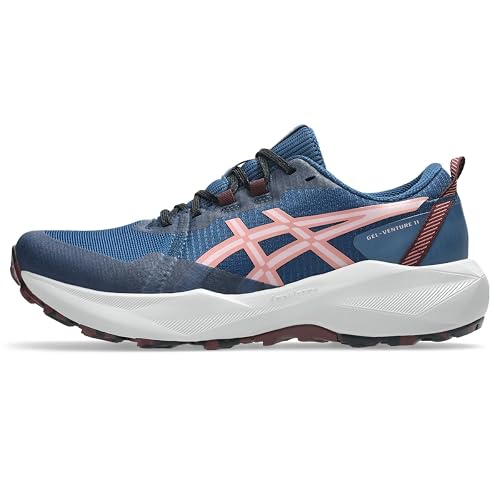 Best for long runsASICS Women's Gel-Venture 11 Trail Running ShoesView on Amazon
- 7
 Best for easy trail daysBrooks Women's Ghost Trail Running ShoeView on Amazon
Our Top Picks
Each pick below is ordered by how well it fits the criteria most trail runners care about: traction, fit, protection, and versatility. Read the Quick Comparison first, then drill into the product sections that match your terrain and mileage.
Quick Comparison
| Product | Best for | Key feature |
|---|---|---|
| Brooks Women’s Cascadia 19 Mountain Trail Running Shoe | Overall trail use | Balanced cushioning and grip for mixed terrain |
| ALTRA Women’s Lone Peak 9 Trail Running Shoe | Wide or zero-drop preference | Foot-shaped toe box and zero heel-to-toe drop |
| New Balance Women’s Dynasoft Nitrel V6 Trail Running Shoes | Rocky, technical trails | Firm protection underfoot |
| Saucony Women’s Excursion Tr15 Trail Running Shoes | All-around training | Versatile outsole for varied surfaces |
| Saucony Women’s Versafoam Excursion Tr13 Trail Running Shoe | Budget-conscious runners | Versafoam cushioning in a value-focused build |
| ASICS Women’s Gel-Venture 11 Trail Running Shoes | Long runs | Gel cushioning for impact absorption |
| Brooks Women’s Ghost Trail Running Shoe | Easy, comfortable trail days | Soft, smooth ride with a cushioned heel |
Brooks Women’s Cascadia 19 Mountain Trail Running Shoe
Brooks Women’s Cascadia 19 Mountain Trail Running Shoe
Best for: Overall trail use across mixed surfaces
This is a strong starting point for runners who split time between dirt roads, singletrack, and the occasional rocky descent. The Cascadia line has long been a reference point in the trail category, which makes it a safe default when you are not sure what your terrain will demand.
Key specs
- Designed for mixed trail terrain
- Lugged outsole for grip on loose surfaces
- Structured upper with a secure midfoot fit
Pros
- Versatile enough for most trail conditions
- Reliable traction on loose dirt and gravel
- Well-established model with consistent sizing feedback
Cons
- May feel too firm for runners who want maximum softness
- Not the lightest option for speed-focused racing
Bottom line: A dependable first choice for runners who want one pair that handles most trails well.
ALTRA Women’s Lone Peak 9 Trail Running Shoe
ALTRA Women's Lone Peak 9 Trail Running Shoe
Best for: Wide or zero-drop preference
ALTRA is known for a zero-drop platform, meaning the heel and forefoot sit at the same height. Runners who want a more natural stride or who have wider forefeet often find the roomy toe box appealing.
Key specs
- Zero-drop platform
- Foot-shaped, roomy toe box
- Designed for rugged trail surfaces
Pros
- Generous toe box suits wider feet
- Zero-drop geometry encourages a midfoot stride
- Strong traction for technical terrain
Cons
- Zero-drop transition can take several weeks for some runners
- Roomy fit may feel loose for narrow feet
Bottom line: The right choice for runners with wider feet or those already comfortable with zero-drop shoes.
New Balance Women’s Dynasoft Nitrel V6 Trail Running Shoes
New Balance Women's Dynasoft Nitrel V6 Trail Running Shoes
Best for: Rocky, technical trails
Runners tackling rock gardens, roots, and steep technical descents tend to want more underfoot protection. This model is built with a firmer feel that shields the foot from sharp objects.
Key specs
- Built for technical trail terrain
- Protective underfoot construction
- Grippy outsole for uneven ground
Pros
- Good protection against rocks and roots
- Stable platform on uneven surfaces
- Durable outsole for rough terrain
Cons
- Firmer ride may feel harsh on long, smooth runs
- Heavier than lightweight racing options
Bottom line: Best for runners who regularly deal with rocky, root-heavy courses.
Saucony Women’s Excursion Tr15 Trail Running Shoes
Saucony Women's Excursion Tr15 Trail Running Shoes
Best for: All-around trail training
The Excursion line is aimed at runners who want a dependable everyday trail shoe. It suits training blocks that combine road connectors with trail sections.
Key specs
- Versatile outsole for varied surfaces
- Balanced cushioning for daily training
- Secure, supportive upper
Pros
- Works well on both trail and light road sections
- Balanced ride for everyday training
- Consistent fit across the Excursion family
Cons
- Not specialized for deep mud or extreme terrain
- Earlier versions may be harder to find in some sizes
Bottom line: A practical pick for runners who mix trail and road miles in one training week.
Saucony Women’s Versafoam Excursion Tr13 Trail Running Shoe
Saucony Women's Versafoam Excursion Tr13 Trail Running Shoe
Best for: Budget-conscious runners
Owners of earlier Excursion models often point to the Versafoam midsole as a comfortable, forgiving platform. This version offers a lower-cost route into the Excursion family for runners who do not need the newest features.
Key specs
- Versafoam cushioning in the midsole
- Trail outsole with multi-directional lugs
- Established Excursion silhouette
Pros
- Comfortable cushioning for moderate mileage
- Solid traction for everyday trails
- Good value for runners new to trail shoes
Cons
- Older model, so availability in every size may vary
- Less refined upper than newer Excursion releases
Bottom line: A smart pick for runners who want a comfortable trail shoe without chasing the latest version.
ASICS Women’s Gel-Venture 11 Trail Running Shoes
ASICS Women's Gel-Venture 11 Trail Running Shoes
Best for: Long runs
The Gel-Venture line uses gel cushioning in the heel to absorb impact over extended distances. It suits runners whose weekly volume is high and who want their legs fresh late in a long outing.
Key specs
- Gel cushioning in the heel
- Trail outsole for loose and uneven ground
- Padded collar for comfort
Pros
- Good shock absorption for long efforts
- Reliable traction on mixed trails
- Comfortable padding around the ankle
Cons
- Heavier than minimalist trail shoes
- Gel heel may feel soft to runners who prefer a firmer ride
Bottom line: Best for runners logging high weekly mileage on trails who value cushioning.
Brooks Women’s Ghost Trail Running Shoe
Brooks Women's Ghost Trail Running Shoe
Best for: Easy, comfortable trail days
The Ghost line is known for a smooth, soft ride. On the trail, it works best for easy runs and recovery days where comfort matters more than technical grip.
Key specs
- Soft, smooth cushioning
- Cushioned heel for impact protection
- Trail outsole for light off-road use
Pros
- Plush, comfortable ride
- Smooth transitions for easy-paced running
- Good choice for recovery runs
Cons
- Less aggressive traction than dedicated mountain shoes
- Not ideal for steep, technical descents
Bottom line: A comfortable option for relaxed trail runs on well-maintained paths.
Buying Guide
Use the factors below to narrow your options before you compare specific models.
Outsole Lug Depth and Traction
Lug depth affects how the shoe bites into soft mud, loose gravel, and wet rock. Shallow lugs are fine for packed dirt, while deeper, multi-directional lugs help on steep or slippery ground.
Good picks for this: Brooks Women’s Cascadia 19 Mountain Trail Running Shoe, New Balance Women’s Dynasoft Nitrel V6 Trail Running Shoes
Heel-to-Toe Drop
Drop is the height difference between the heel and forefoot. Traditional trail shoes often range from about 4 to 10 millimeters, while zero-drop shoes keep the foot level. Switching drops too quickly can strain calves and Achilles tendons, so transition gradually.
Good picks for this: ALTRA Women’s Lone Peak 9 Trail Running Shoe, Brooks Women’s Ghost Trail Running Shoe
Fit, Width, and Toe Box Shape
Women’s lasts are typically narrower through the heel and midfoot. If you have a wide forefoot, look for a roomy toe box. Try shoes on in the afternoon, when feet are slightly swollen, and wear the socks you plan to run in.
Good picks for this: ALTRA Women’s Lone Peak 9 Trail Running Shoe, Saucony Women’s Excursion Tr15 Trail Running Shoes
Cushioning and Protection
Higher cushioning reduces impact on long runs, while firmer midsoles offer more protection from rocks and roots. Match the amount of cushioning to your weekly mileage and the roughness of your trails.
Good picks for this: ASICS Women’s Gel-Venture 11 Trail Running Shoes, New Balance Women’s Dynasoft Nitrel V6 Trail Running Shoes
Upper Durability and Water Resistance
Mesh uppers breathe well but let in grit and water. Reinforced overlays protect against abrasion from rock and brush. If you run in wet climates, consider how quickly the upper drains and dries.
Good picks for this: Saucony Women’s Excursion Tr15 Trail Running Shoes, Brooks Women’s Cascadia 19 Mountain Trail Running Shoe
Weight and Intended Use
Heavier shoes add stability and protection, while lighter ones feel faster on runnable trails. Be honest about your typical terrain. A lightweight shoe on very technical ground may leave you under-protected.
Good picks for this: Brooks Women’s Ghost Trail Running Shoe, Saucony Women’s Versafoam Excursion Tr13 Trail Running Shoe
Care and Replacement
Rinse mud off after runs, let shoes air-dry away from direct heat, and avoid machine washing. Most runners replace trail shoes after roughly 300 to 500 miles, but outsole wear and midsole compression are better indicators than mileage alone.
Good picks for this: Saucony Women’s Versafoam Excursion Tr13 Trail Running Shoe, ASICS Women’s Gel-Venture 11 Trail Running Shoes
FAQ
What should I look for in ladies trail running shoes?
Focus on outsole lug depth for traction, a fit that accommodates your foot width, cushioning that matches your mileage, and an upper that handles your local conditions. Women’s lasts are often narrower in the heel, so check the fit at the heel and midfoot as well as the toe box.
Are women’s trail running shoes different from men’s?
Women’s versions are typically built on lasts designed for a narrower heel, a different arch and volume profile, and sometimes a shorter length at the same width. The outsole and midsole compounds are often similar, but the fit geometry is adjusted.
How do I know what size to buy?
Measure your foot length and width, then compare to the brand’s size chart. Many runners leave about a thumb’s width of space in front of the longest toe. Try shoes on later in the day with your running socks.
Is zero-drop right for every runner?
No. Zero-drop shoes change how the calf and Achilles work, and the transition takes time. Runners with a history of calf or Achilles issues should consult a physical therapist or sports medicine professional before switching.
How often should I replace trail running shoes?
Many runners replace trail shoes around 300 to 500 miles, but check the outsole lugs and midsole feel. If the lugs are worn smooth or the cushioning feels flat, it is time for a new pair.
Can I use trail running shoes on the road?
You can, especially for short road sections, but the aggressive lugs can feel unstable on pavement and wear faster. Road shoes are generally better for regular road mileage.
What is the difference between trail running shoes and hiking shoes?
Trail running shoes are lighter and more flexible, designed for faster movement. Hiking shoes are heavier, offering more structure and protection for carrying loads over longer days.
Conclusion
For most runners, the Brooks Women’s Cascadia 19 Mountain Trail Running Shoe is a sensible starting point because of its balanced traction and cushioning. Runners with wider feet or an interest in zero-drop geometry should look at the ALTRA Women’s Lone Peak 9 Trail Running Shoe. Those tackling rocky, technical ground may prefer the New Balance Women’s Dynasoft Nitrel V6 Trail Running Shoes. Long-mileage runners can consider the ASICS Women’s Gel-Venture 11 Trail Running Shoes, while the Saucony options and Brooks Ghost suit training blends and easier days. Match the shoe to your terrain and mileage, and check fit in person when you can.
Sources
- Consumer product safety guidance on footwear and injury prevention (cpsc.gov)
- Research on running biomechanics, footwear, and lower-limb injury (nih.gov)
- Foot health guidance on fit, shoe width, and foot care
Related reading
- Asics Trail Running Shoes Ladies: A Practical Guide (2026)
- 5 Best Saucony Ladies Trail Running Shoes for Every Trail (2026)
- Women's Trail Running Shoes ASICS: 3 Best Picks for Every Trail (2026)
- Winter Running Trail Shoes: 6 Best Picks for Cold, Wet Trails (2026)
- Trail Running Shoes vs Running Shoes (2026): Which Is Better for Your Runs?
- Trail Running Shoes for Overpronators: 6 Best Picks for Every Trail (2026)
About Caleb Morgan
Caleb Morgan is part of our editorial team and reviews and edits our running gear & races guides, checking product details against manufacturer specifications and owner feedback.




