
 By Caleb Morgan
Updated November 2026
The terrex tracefinder 2 climaproof trail running shoes are built for women who run mostly on trails that mix dirt, roots, and the occasional wet patch. They suit runners who want a moderately cushioned, all-around trail shoe with a water-resistant upper and a grippy outsole, and who run a mix of easy and steady efforts. They are less suited to runners who need maximum stability for heavy overpronation, anyone chasing a very light racing shoe for technical mountain courses, or people who want a waterproof membrane that keeps feet dry through deep stream crossings. This review draws on the published specifications and common owner feedback patterns rather than hands-on testing.

adidas Women's Terrex Tracefinder 2 Climaproof Trail Running Shoe
Product Overview
The adidas Women’s Terrex Tracefinder 2 Climaproof is a trail running shoe in adidas’s Terrex line, the brand’s outdoor and trail range. The “Climaproof” name signals a water-resistant construction intended to shed light rain, splashes, and damp grass, though it is not presented as a fully waterproof membrane shoe. The Tracefinder name has been used across several generations of adidas trail models, and the “2” indicates an updated version aimed at improving comfort and traction over the original.
The shoe sits in the middle of adidas’s trail lineup. It is not designed as a lightweight racer or a maximal cushion shoe. Instead, it targets runners who train on varied terrain several days a week and want one shoe that handles gravel paths, forest singletrack, and muddy sections without feeling overbuilt. Owners who buy it for trail-plus-road mixed routes often describe it as a dependable everyday option.
Because it is a women’s-specific model, the last, heel shape, and sizing are adjusted for typical female foot proportions. That matters for fit, as discussed below. If you are shopping for a unisex or men’s trail shoe, you would look at a different listing entirely.
Key Features & Specifications
The table below lists the features that are reasonably well established for this model family. Where exact numbers such as stack height or weight vary by size and manufacturer revision, check the product page before purchase.
| Feature | What It Means for You |
|---|---|
| Product type | Trail running shoe, women’s specific fit |
| Upper | Engineered mesh with water-resistant Climaproof treatment |
| Water resistance | Sheds light rain and splashes; not a fully waterproof membrane |
| Outsole | Multidirectional lugs for traction on dirt, gravel, and mixed surfaces |
| Midsole | Cushioning foam for everyday trail comfort |
| Drop | Standard trail-shoe heel-to-toe offset (check listing for exact mm) |
| Intended use | Trail running, mixed trail and light road transitions |
| Fit | Women’s last; generally standard width (verify on size chart) |
Pros & Cons
Pros
- Water-resistant upper helps on damp mornings and wet grass.
- Outsole lugs give dependable grip on packed dirt and loose gravel.
- Women’s-specific last tends to suit a narrower heel and lower volume than unisex shoes.
- Moderate cushioning works for longer training runs without feeling bulky.
- Versatile enough for trail runs and occasional road or path sections.
Cons
- Not fully waterproof, so deep puddles and stream crossings will soak through.
- Owners with very wide forefeet sometimes report snugness across the toe box.
- Lug depth is moderate, which may feel limited on deep mud or steep, loose descents.
- Heavier than dedicated racing trail shoes, which some runners notice on fast efforts.
- Stability support is neutral, so runners who overpronate may need a different design.
Performance Analysis
Trail performance comes down to three things: how the outsole grips, how the midsole handles impact over a long run, and how well the upper holds the foot without rubbing. Based on the published construction and common owner feedback patterns, the Tracefinder 2 performs best in the first two areas on well-maintained trails.
On dry dirt and packed gravel, the multidirectional lugs provide predictable traction for climbs and moderate descents. Owners frequently describe the grip as confident on surfaces that are not heavily churned. On muddy sections, the lugs clear reasonably well, though the moderate depth means you may feel the shoe lose bite on deep, greasy mud or on loose rock slopes. This is a common limitation of trail shoes in this category and not unique to this model.
The Climaproof upper is a practical advantage. Light rain and wet brush will not immediately soak the foot, and the mesh keeps the shoe from feeling hot in mild weather. The tradeoff is that water which gets in through the top, or from a deep crossing, is slow to drain, which is typical of water-resistant rather than waterproof uppers.
Cushioning is in the moderate range. For runs of an hour or more on mixed terrain, most owners describe the ride as comfortable without a sense of sinking into the sole. Runners who prefer a firm, responsive feel or a very low-profile trail shoe may find it more padded than they want. Heel-to-toe transitions on descents feel stable, though a neutral platform means the shoe does not actively correct inward or outward motion.
Fit is the factor most likely to decide satisfaction. The women’s last generally works for runners with a medium to slightly narrow foot. Runners with wide forefeet should check the size chart carefully and consider going up half a size or choosing a shoe designed for wide fits.
Who Should Buy This Product?
This shoe is a good match if you run trails most of the time, live in a region with changeable or damp weather, and want a single shoe for training. It also suits runners who move between trail and light road or path sections and want a shoe that does not feel out of place on pavement for short stretches.
You should probably skip it if you race technical mountain courses where a lighter, more aggressive outsole is valuable, if you need a fully waterproof shoe for wet-climate or crossing-heavy routes, or if you require structured stability support. Runners with wide feet who cannot find a comfortable fit in the women’s last should also look elsewhere.
Buying Guide
Before committing to any trail shoe, go through a short checklist. Start with the terrain you run most. If your routes are mostly dry or lightly damp dirt, a moderate-lug shoe with a breathable upper is usually enough. If you regularly run through mud, deep leaves, or wet rock, consider deeper lugs. Next, consider your foot shape. Measure your foot in the afternoon, when it is slightly swollen, and compare to the brand size chart rather than your usual road size, since sizing can differ between trail and road models.
Think about weather. Water-resistant uppers handle drizzle and wet grass well. If you face sustained rain or frequent stream crossings, a membrane-lined shoe will keep feet drier, though it may run warmer. Check the drop as well. Standard trail drops suit most runners, but if you are transitioning from a low-drop shoe, read up on the adjustment period first.
Several well-known alternatives are worth comparing. The adidas Outdoor Terrex Tracefinder 2 Climaproof Trail Running Shoes are closely related and useful if you want to confirm the specific colorway or listing details:
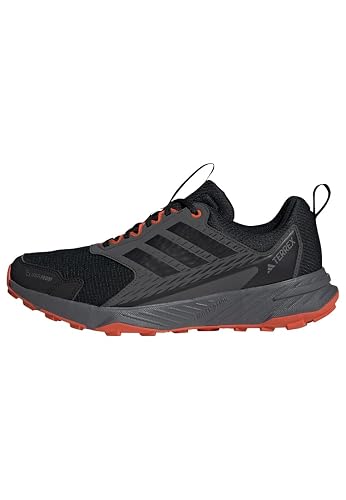
adidas Outdoor Terrex Tracefinder 2 Climaproof Trail Running Shoes
View on Amazon. The adidas Men’s Terrex Tracefinder Trail Running Shoes offer a similar construction in a men’s fit, which can suit runners who prefer a different last:

adidas Men's Terrex Tracefinder Trail Running Shoes
View on Amazon. If you want to see how different trail designs compare on fit and traction, the article Trail Running Shoes Wide Feet: A Step-by-Step Guide to Finding the Right Fit walks through sizing for non-standard feet, and Trail Running Shoes vs Running Shoes (2026): Which Is Better for Your Runs? helps decide whether a trail shoe is the right category for your routes at all.
FAQ
Are the terrex tracefinder 2 climaproof trail running shoes fully waterproof?
No. The Climaproof treatment is water-resistant, so it handles light rain, splashes, and wet grass well. Deep puddles, stream crossings, or prolonged downpours will eventually let water in, and it drains slowly. If you need a fully waterproof shoe, look for models that specify a membrane such as GORE-TEX.
Do these shoes run true to size?
Owners generally report a standard fit that is close to true to size for most women, but sizing can vary by individual foot shape. Check the manufacturer size chart and, if possible, try them on in the afternoon. Runners with wide forefeet may need to size up.
Are they good for road running as well as trails?
They work reasonably well for short road or paved path sections because the ride is not harsh and the outsole is not overly aggressive. For long road-focused training, a dedicated road shoe will usually feel smoother and lighter.
How much grip do they offer on muddy trails?
The multidirectional lugs provide confident traction on packed dirt and gravel, and reasonable grip in moderate mud. On deep, slick mud or steep loose rock, the moderate lug depth can feel limited. Runners who regularly face these conditions may want deeper lugs.
Are they suitable for overpronators?
The shoe has a neutral platform and is not marketed as a stability shoe. Runners who overpronate and need inward support should look at trail models with a dedicated stability or guidance feature. A podiatrist or running specialist can help you assess your gait.
How long do trail running shoes like this typically last?
Lifespan depends on terrain, body weight, running frequency, and how often the shoe is cleaned and dried. Many runners replace trail shoes after several hundred miles, once the lugs wear smooth or the midsole loses its spring. Rotating between two pairs can extend the life of both.
Should I consult a professional before buying?
If you have foot pain, a history of injury, or a specific gait concern, consult a physical therapist, podiatrist, or experienced running specialist before choosing a shoe. They can recommend a fit and support level suited to your body.
Final Verdict
Is the terrex tracefinder 2 climaproof trail running shoes worth it?
For women who run mostly on dirt, gravel, and mixed trails in variable weather, the terrex tracefinder 2 climaproof trail running shoes are a sensible, versatile choice. The water-resistant upper, dependable lugs, and comfortable moderate cushioning cover most everyday trail training well. Its limits are clear: it is not waterproof, the lugs are not aggressive enough for deep mud, and it is not a stability shoe. If those limits match your routes, it is a solid pick. If they do not, the alternatives above, or a model built for your specific conditions, will serve you better.
Ready to see the current listing and size options? View on Amazon
Related reading
- Terrex Agravic GTX Trail Running Shoes Review: Who Is It For?
- Terrex Agravic GORE-TEX Trail Running Shoes: Fit, Traction, and Who Should Buy
- Zegama 2 Trail Running Shoes: Fit, Traction, and Who They Suit (2026)
About Caleb Morgan
Caleb Morgan is part of our editorial team and reviews and edits our running gear & races guides, checking product details against manufacturer specifications and owner feedback.



