
 By Caleb Morgan
Updated November 2026
Salomon trail running shoes Speedcross models are built for runners who spend most of their time on loose gravel, mud, wet roots and steep climbs where grip matters more than cushioning or road comfort. This review looks at the men’s Speedcross 4 listing, its aggressive lug pattern, fit profile and the trade-offs you should weigh before buying. It is a research-based review drawn from manufacturer specifications and common owner feedback, not hands-on testing. Buy this shoe if you run technical terrain, want a locked-in fit and value outright traction. Skip it if you mostly run pavement, need a wide toe box or prefer a soft, highly cushioned ride.
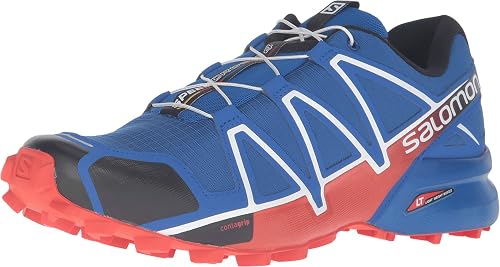
Salomon Men's Speedcross 4 Trail Running Shoes
Product Overview
The Salomon Men’s Speedcross 4 Trail Running Shoes sit in the brand’s long-running Speedcross line, a family known for deep, widely spaced lugs and a snug, almost sock-like upper. The Speedcross name has become shorthand for aggressive trail traction, and the design is built around that single purpose: staying planted when the ground is soft, slick or uneven.
Compared with lighter, more flexible trail shoes, the Speedcross tends to feel firmer underfoot and more structured around the heel and midfoot. Owners often describe it as a shoe that asks you to commit to the terrain rather than float over it. That character suits technical descents and muddy climbs, but it can feel stiff on long, runnable sections of smooth dirt.
If you are comparing options within the brand, our guide to Salomon Speedcross 6 Trail Running Shoes Review: Is It Worth It? covers the newer generation, and Salomon Trail Running Shoes: How to Choose the Right Pair in 7 Steps walks through choosing a pair based on terrain and foot shape.
Key Features & Specifications
The table below lists the features that are consistently associated with this model family. Where a specific measurement varies between colorways or production runs, we have left it out rather than guess.
| Feature | What It Means for You |
|---|---|
| Model | Speedcross 4, men’s trail running shoe |
| Intended use | Technical trail running, mud, loose and wet surfaces |
| Outsole | Deep, widely spaced aggressive lugs for grip in soft ground |
| Upper | Engineered mesh with a snug, locked-in fit through the midfoot |
| Lacing | Quicklace-style system for fast tightening and adjustment |
| Drop | Moderate heel-to-toe offset typical of the Speedcross line |
| Toe box | Relatively narrow to medium; not designed as a wide-fit shoe |
| Cushioning | Firm to moderate; prioritizes ground feel and stability over plushness |
For exact weight, stack height and drop figures, check the current manufacturer listing, since these can change between model years.
Pros & Cons
Pros
- Aggressive lugs provide strong grip on mud, loose gravel and wet rock.
- The snug upper and midfoot lockdown reduce heel slip and lateral movement on descents.
- Quick-lace style closure makes adjustment fast, especially with cold or wet hands.
- Good ground feel for technical footing, where you need to place each step precisely.
- Well suited to the brand’s long-established fit profile for runners who like a secure shoe.
Cons
- The narrow-to-medium toe box may feel tight for runners with wide or swollen forefeet.
- Firmer cushioning can feel harsh on long runs over hard-packed trail or pavement sections.
- Aggressive lugs wear faster on hard surfaces and can feel less efficient on smooth dirt.
- Heavier than minimal or racing-oriented trail shoes, which matters on fast, runnable courses.
- Sizing can run close to the foot, so many owners recommend trying a half size up if you are between sizes.
Performance Analysis
Traction is the core strength here. Deep, spaced lugs bite into soft ground and shed mud better than shallower patterns, which is why the Speedcross line has a reputation in wet, muddy conditions. On steep, loose descents, the lockdown from the upper helps keep your foot from sliding forward, which is where many shoes with looser fits cause problems.
The trade-off is ride feel. Because the sole is designed for grip and stability, it tends to feel firmer and more deliberate than softer trail shoes. Runners who prioritize a cushioned, bouncy stride may find the ride less forgiving over distance, particularly once they hit runnable terrain with hard surfaces. Owners frequently note that the shoe rewards technical running and feels most at home on uneven, variable ground.
Fit is where opinions diverge most. Many runners with standard-width feet report a secure, comfortable fit once they find the right size. Runners with broad forefeet or those who need extra toe room often report pressure over the toes on longer efforts. Breathability is adequate for most conditions, though the closed, structured upper can run warm in summer heat and hold moisture in wet weather. If you run mostly in dry, temperate conditions, that may be a minor point; if you run in humid climates, it deserves attention.
For a broader comparison of how trail and road-oriented shoes differ, see Trail Running Shoes vs Running Shoes (2026): Which Is Better for Your Runs?.
Who Should Buy This Product?
This shoe is a strong match for trail runners who regularly handle mud, wet roots, loose gravel and steep, technical descents. It also suits runners who value a locked-in fit and want their shoe to do more of the stabilizing work, and for anyone who has struggled with heel slip in looser trail models.
It is less suitable for road-to-trail runners who mostly cover smooth paths, anyone with a wide forefoot who has not been able to find a comfortable fit in standard-width Salomon models, or runners who want a light, highly cushioned shoe for long, fast efforts. If you fall into those groups, look at the alternatives discussed below.
Buying Guide
Before buying any trail shoe, consider four factors: the terrain you run most, your foot width, how much cushioning you want and your typical distance. Measure your feet in the afternoon, when they are slightly swollen, and compare against the brand’s size chart rather than relying on your usual size alone.
- Match the outsole to your terrain. Deep lugs suit mud and loose ground. Shallower patterns suit mixed, mostly packed trails.
- Check the toe box. If you have wide feet, a narrow-to-medium toe box will feel cramped on long runs, regardless of how good the grip is.
- Decide how much cushioning you need. Firmer shoes give better ground feel; softer shoes help on long, hard-surface miles.
- Test the heel lock. Walk and jog briefly in the store, especially on any incline, to confirm the heel stays put.
If the Speedcross 4 does not match your needs, two other well-known options from the same brand are worth considering. The women’s Speedcross model suits runners who want the same aggressive lug approach in a women’s fit:

Salomon Women's Speedcross Trail Running Shoes
View on Amazon. For runners who want a newer Speedcross generation, the Speedcross 6 line is covered in more detail in Salomon Speedcross 6 GORE-TEX Trail Running Shoes Review: Who Is It For?, and the model is also available as a women’s option:

Salomon Womens Speedcross 6
For a step-by-step approach to fit, see Trail Running Shoes Wide Feet: A Step-by-Step Guide to Finding the Right Fit, and if you are weighing drop or zero-drop designs, Trail Running Shoes Zero Drop: 7 Things to Know Before You Buy explains the differences.
FAQ
Are Salomon Speedcross shoes good for muddy trails?
Yes. The deep, widely spaced lugs are designed to grip soft ground and shed mud, which is the main reason the line is recommended for wet, muddy conditions.
Do Speedcross shoes run true to size?
Owners frequently report that the fit runs close to the foot. Many recommend trying a half size up if you are between sizes, and checking the manufacturer’s size chart before ordering.
Are Speedcross shoes wide enough for wide feet?
Generally, no. The toe box is relatively narrow to medium, so runners with wide forefeet often find them uncomfortable on longer runs. Consider a wide-fit trail shoe from another brand instead.
Are Speedcross shoes good for road running?
They are not ideal. The aggressive lugs wear faster on pavement and feel less efficient on smooth surfaces. A road or road-to-trail shoe is a better choice for mostly paved routes.
How long do trail running shoes like the Speedcross last?
Lifespan depends on terrain, body weight, running form and how often you run on hard surfaces. Many runners replace trail shoes based on visible lug wear, midsole compression or changes in how the shoe feels, rather than a fixed mileage.
Do Speedcross shoes provide enough cushioning for long runs?
The cushioning is firmer than many trail shoes. It works well for technical, shorter efforts, but runners planning long, hard-surface miles may want a more cushioned option.
Should I buy the men’s or women’s version?
Choose the version built for your foot shape and fit preference. The men’s and women’s models differ in last shape and sizing, so compare size charts rather than assuming a direct conversion.
Final Verdict
The Salomon Men’s Speedcross 4 Trail Running Shoes deliver strong, confidence-inspiring traction and a secure fit for runners who spend their time on mud, loose ground and technical descents. Its firmer ride and narrower toe box are the main trade-offs, so it is best for runners with standard-width feet who prioritize grip over cushioning. If your routes are mostly smooth or you need a roomier forefoot, one of the alternatives above will likely serve you better. For the current listing and availability, see View on Amazon. As always, if you have a foot condition or injury history, consult a podiatrist or sports medicine professional before changing your footwear.
About Caleb Morgan
Caleb Morgan is part of our editorial team and reviews and edits our running gear & races guides, checking product details against manufacturer specifications and owner feedback.



