 By Caleb Morgan
Updated November 2026
The Salomon XA Pro 3D trail running shoes suit runners who want a stable, protective, and fairly durable trail shoe for mixed terrain, from packed dirt and gravel to rooty singletrack and muddy shortcuts. They also work well for hikers and walkers who spend a lot of time on uneven ground. Buy them if you value a secure midfoot lockdown, a rock-plate-style protection feel, and a shoe that handles variable conditions without much fuss. Skip them if you want a lightweight racing flat, a highly cushioned daily trainer for long road miles, or a shoe with a very low, minimalist feel. Runners with wide forefeet or very low-volume feet should check fit carefully before committing, since the upper and lacing structure may not suit every foot shape.
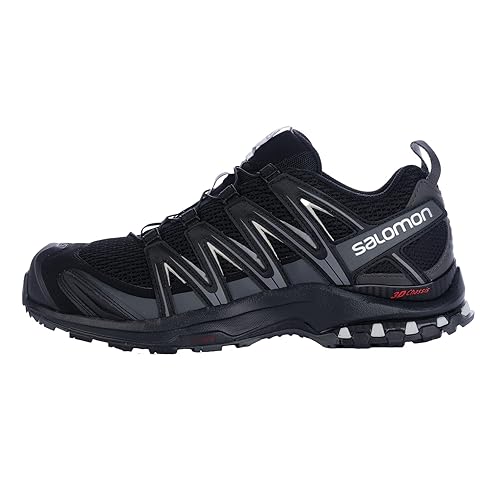
Salomon Men’s XA PRO 3D Trail Running Shoes
Product Overview
The XA Pro 3D is one of Salomon’s long-running trail models, built around the brand’s “3D” chassis and a supportive, structured upper. It sits in the category of all-around trail shoes rather than ultra-specific racers or heavy-duty mountaineering footwear. Salomon positioned the line for runners and hikers who move between paved approaches, forest paths, and technical sections on the same outing. If you are comparing it with newer Salomon releases, our guide to Salomon Trail Running Shoes: How to Choose the Right Pair in 7 Steps explains how the brand’s lineup is organized and which models target which running styles.
The shoe uses a fairly firm, stable platform with a moderate stack height and a midsole that emphasizes control over softness. That makes it a better fit for runners who want a planted, confidence-inspiring ride on loose footing. The upper relies on overlays and a structured heel to hold the foot in place, which is a big part of why many owners describe it as secure. For context on how Salomon’s other trail shoes handle fit and traction, see Salomon XT-6 Trail Running Shoes: Fit, Feel, and Who They Suit (2026).
Because this is a research-based review, the observations below draw on manufacturer specifications and patterns that owners commonly report, not on any claim of hands-on lab testing.
Key Features & Specifications
The table below lists the characteristics most relevant to buyers. Where exact figures vary by size or production run, we describe the feature rather than invent a number.
| Feature | What It Means for You |
|---|---|
| Product type | Men’s trail running shoe, designed for off-road and mixed terrain |
| Chassis | Salomon “3D” chassis, a structured platform meant to add stability and foot control |
| Outsole | Multi-directional lugged rubber outsole for traction on dirt, mud, and loose rock |
| Upper | Mesh and synthetic overlays with a structured heel counter for lockdown |
| Lacing | Standard lace system with a locking-style eyelet arrangement to help keep the foot centered |
| Drop | Moderate heel-to-toe drop, typical of traditional trail shoes rather than zero-drop designs |
| Intended use | Trail running, fast hiking, and mixed-surface training |
| Fit | Generally considered standard to snug through the midfoot; sizing guidance varies by retailer |
Check the official Salomon size chart and the Amazon listing for exact weight, stack height, and drop figures for your size, since those numbers can change between versions.
Pros & Cons
Pros
- Secure midfoot and heel hold, which many owners credit for reducing foot slide on descents.
- Supportive, stable platform that suits runners who want guidance rather than a soft, cushioned ride.
- Aggressive-enough lugs for dirt, mud, and loose gravel without feeling overly clunky on hardpack.
- Protective upper construction that tends to hold up well against rock and brush contact.
- Versatile enough for trail running, hiking approaches, and walking on uneven ground.
Cons
- The structured fit can feel restrictive for runners with wide forefeet or high volume.
- Heavier than lightweight racing shoes, which matters for fast, long efforts.
- Firm cushioning may feel harsh on very long runs or for runners who prefer a plush ride.
- Not a natural choice for extended road running, where a road-oriented shoe will feel more efficient.
- Sizing can require some trial and error, especially if you usually wear a specific brand’s fit.
Performance Analysis
Performance on the trail depends heavily on the surface and on how you move. The XA Pro 3D’s stable platform and lugged outsole give it a planted feel on the kinds of terrain it is built for: packed singletrack, forest roots, and gravel fire roads with occasional loose stones. Owners frequently mention that the shoe feels confident on descents, where the locked-in fit helps prevent the foot from sliding forward inside the toe box. That same structure is what makes the shoe feel controlled rather than bouncy.
On wet or muddy ground, the lug pattern generally bites well, though it is not a dedicated mud shoe. In soft, deep mud with clay, the outsole can clog, which is common to most lugged trail designs. Runners who spend much of their time in those conditions may want to look at a more aggressive outsole.
Cushioning is where expectations matter most. The midsole is firmer and more protective than plush, which suits runners who want to feel the ground and maintain stability. For runners coming from a cushioned road trainer, the first few runs can feel firm, and the transition may take some time. Runners who also run on pavement should consider whether a road-leaning shoe is a better choice, a question explored in Can I Use Trail Running Shoes for Road Running? Pros, Cons and Picks (2026).
Weight is moderate for a trail shoe. It is not the lightest option, so it may feel less efficient on fast, flat efforts, but for mixed-terrain training and hiking it feels appropriately substantial. Durability is usually described positively by owners, particularly in the outsole and upper overlays, though wear rates depend on terrain and mileage.
Who Should Buy This Product?
The XA Pro 3D is a strong match for runners who train on mixed or technical trails and want a supportive, secure shoe that handles rocks, roots, and loose surfaces. It also suits hikers who want a trail-running shoe for fast hikes and approach walks. Runners who overpronate or prefer a stable platform may appreciate the structured feel, though anyone with specific gait concerns should consult a podiatrist or running specialist before buying.
You should probably skip this shoe if you want a light, fast racing flat, a highly cushioned shoe for high-mileage road work, or a zero-drop, minimalist feel. Runners with wide or very low-volume feet may find the fit difficult to dial in. For those who want a model with a different fit profile, our roundup of 5 Best Salomon Men's Trail Running Shoes for Every Trail (2026) compares alternatives across terrain types.
Buying Guide
Before you buy, consider the terrain you run most, your foot shape, and how much cushioning you want. Use these steps to narrow your choice:
- Measure your feet. Measure both feet in the evening, when they are slightly swollen, and use the brand’s size chart. Leave roughly a thumb’s width of space at the toe.
- Test the midfoot lockdown. Your heel should not lift, and the midfoot should feel snug without pinching.
- Match the outsole to your terrain. Shallow lugs suit hardpack and gravel. Deeper lugs suit mud and wet roots.
- Decide how much cushioning you need. Firmer shoes offer more feedback and control; softer shoes reduce impact feel on long runs.
- Check the return policy. Trail shoes often need a few runs to judge properly.
If the XA Pro 3D’s fit or feel does not match your needs, these alternatives are worth comparing:
- Salomon Women’s XA PRO 3D Trail Running Shoes: The women’s version of the same family, with a fit adapted to a different foot shape.

Salomon Women’s XA PRO 3D Trail Running Shoes
- ALTRA Men’s Olympus 6 Trail Running Shoe: A cushioned, wider-toe-box option for runners who want more room and a softer platform.

ALTRA Men's Olympus 6 Trail Running Shoe
For a broader look at fit and feel across Salomon’s trail range, see Salomon Trail Running Shoes Speedcross Review (2026) and Salomon Pulsar Trail Running Shoes: Fit, Traction, and Who Should Buy (2026).
FAQ
Are Salomon XA Pro 3D trail running shoes good for beginners?
Yes, for many beginners the stable, supportive structure is helpful on uneven ground. Beginners with a history of ankle issues or with specific gait concerns should get fitted by a specialist.
Do the XA Pro 3D shoes run true to size?
Many owners report a snug midfoot and a structured fit, so sizing can feel slightly different from other brands. Check the official size chart and, if possible, try them on with your usual running socks.
Can I use them for road running?
You can, for short road sections, but the firm platform and lugged outsole are not ideal for long paved runs. A road-oriented shoe will feel more efficient for that purpose.
How long do trail running shoes like these typically last?
Lifespan depends on terrain, body weight, and mileage. Many runners replace trail shoes after several hundred miles, but check the outsole and midsole for wear rather than relying on a set number.
Are they waterproof?
The standard XA Pro 3D is not presented as a waterproof model. If you run in wet conditions often, look at Salomon’s waterproof options and read Salomon Trail Running Shoes Waterproof Review: Alphaglide Gore-Tex (2026).
Are they good for hiking as well as running?
Yes, many owners use them for fast hikes and approach walks. For long, heavily loaded hiking, a dedicated hiking boot or a more robust shoe may be a better choice.
Do I need a break-in period?
Most runners find the shoe feels firmer at first. A few short runs on varied terrain usually help you judge the fit and feel before committing to long efforts.
Final Verdict
Is the Salomon XA Pro 3D worth buying?
The XA Pro 3D is a dependable, stable trail shoe for runners who want secure fit, solid traction, and protection on mixed terrain. It is less suited to ultralight racing, plush road cushioning, or runners with wide feet. If its structure and firmer ride match your goals, it is a sound choice for trail training and fast hiking. Before ordering, confirm your size against the chart and check the return policy.
About Caleb Morgan
Caleb Morgan is part of our editorial team and reviews and edits our running gear & races guides, checking product details against manufacturer specifications and owner feedback.